on
Split
We have a busy day today starting with a tour from the ship in the morning that goes to Salona and the UNESCO World Heritage Site Trogir.
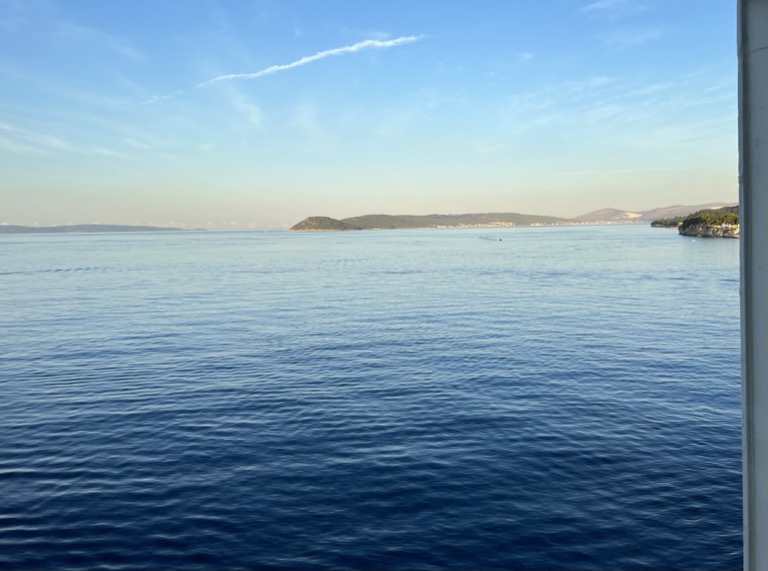
The sea was very calm as we arrived early in the morning.
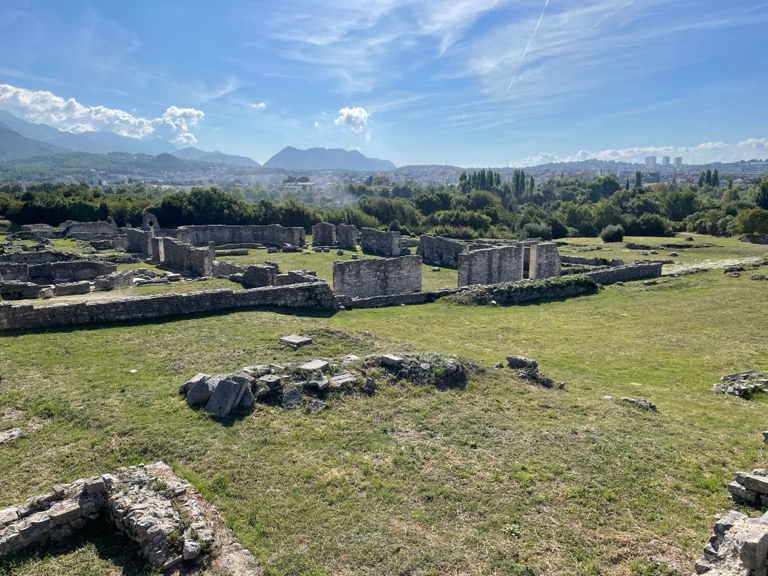
Salona is an old Roman town about a 20-minute drive from Split. We had a 45-minute walking tour from the local guide and then about 15 minutes to look around on our own and get back up the hill to the bus. Salona was excavated in the early 1900s by Father Frane Bulić who started the Christian archeologists group, so he focused on that part of town, which was actually outside the old city walls. The old town itself is mostly privately owned land and not excavated.
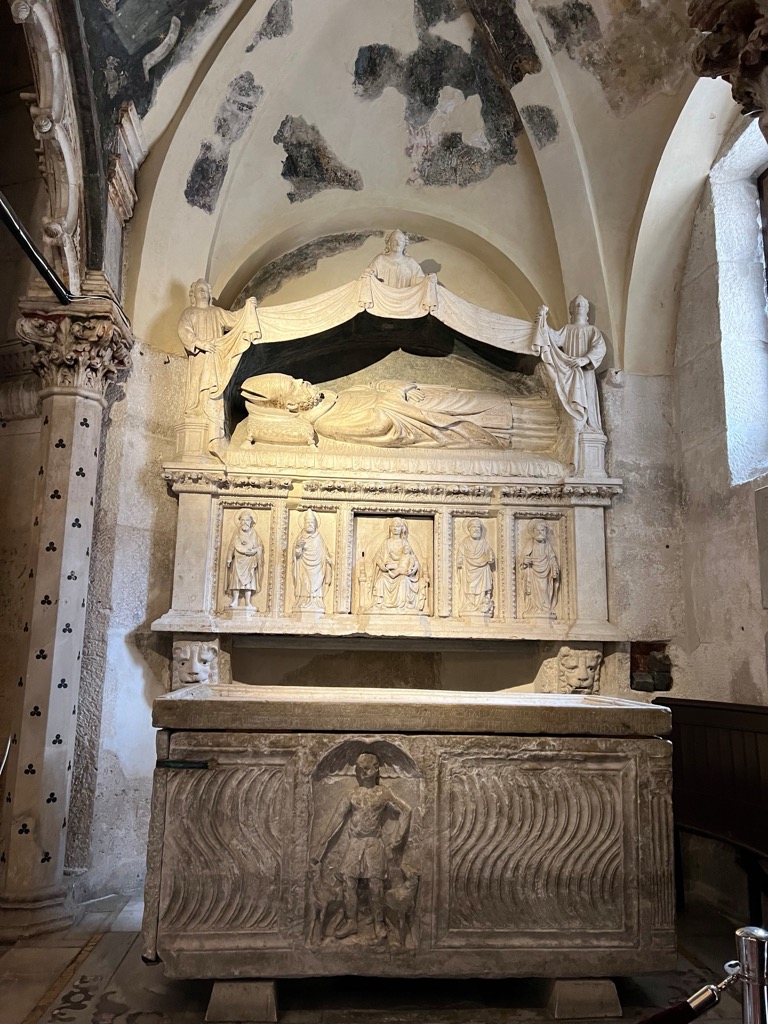
St. Domnius was the bishop of Salona. Roman Emperor Diocletian had him executed. He was initially buried in the cathedral in Salona, but was moved later, more on that below.
Tusculum is the house built by Father Frane Bulić, the first archeologist to dig at Salona.
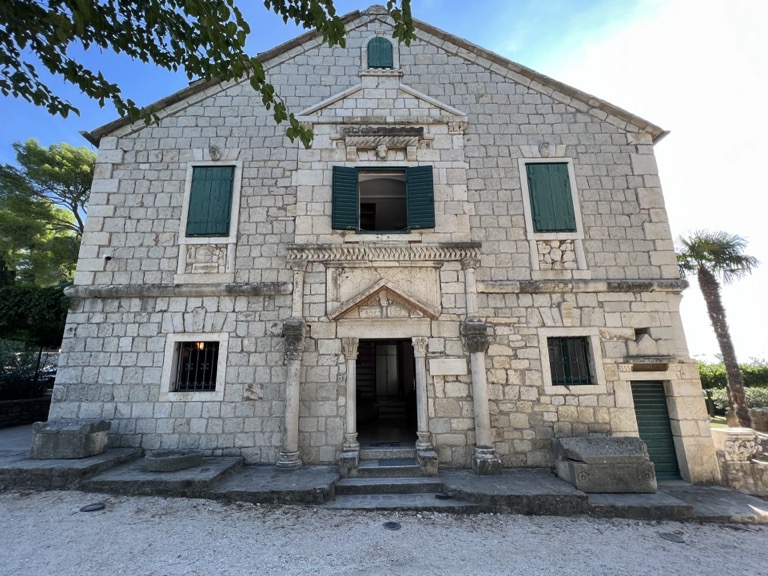
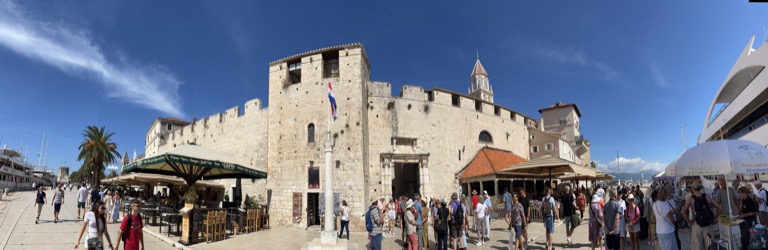
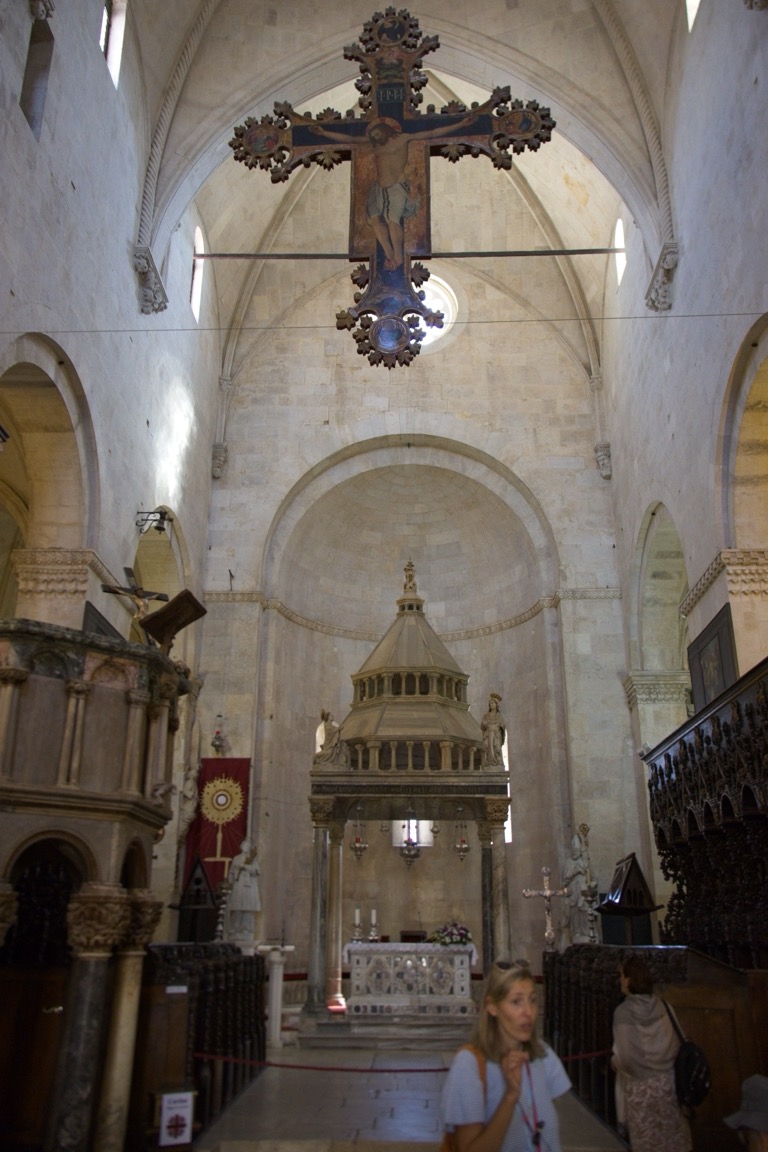
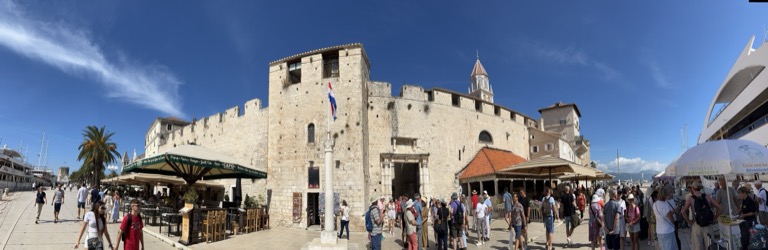
Then we drove to Trogir and had a 45-minute tour of the old town there and about 10 minutes on our own before coming back.
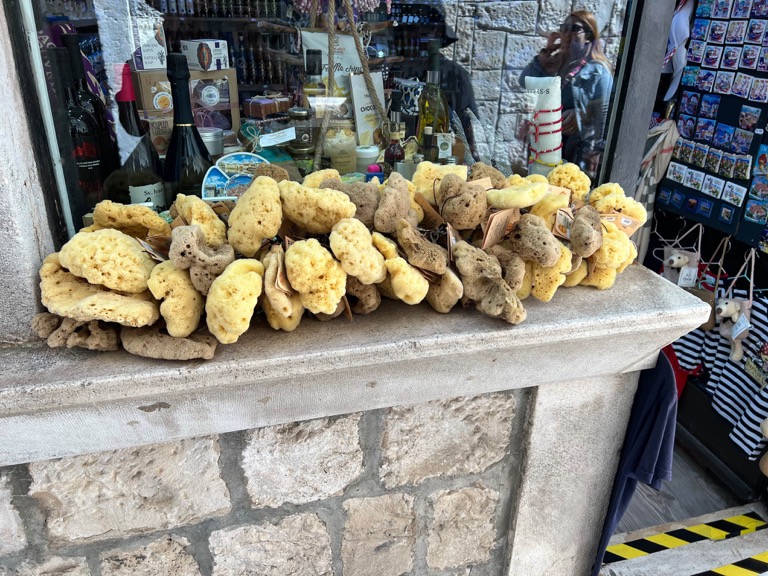
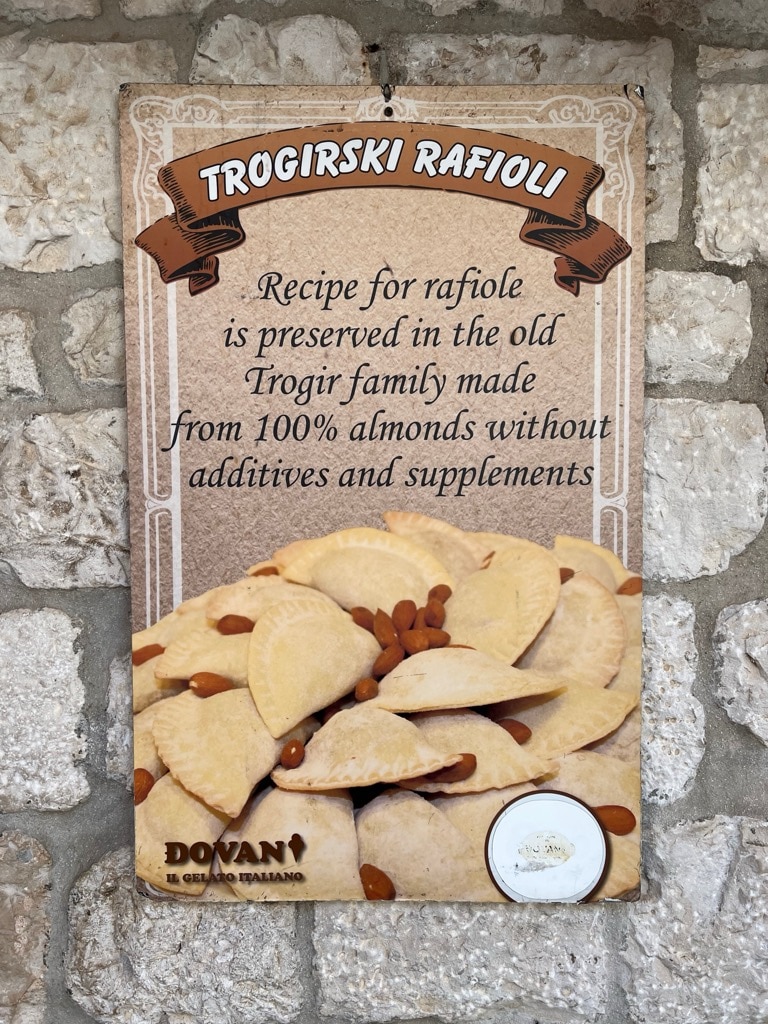
We had walked by a place selling Trogir Rafioli and I wanted to try that, so Donna and I went back for it. We got the traditional almond filling and enjoyed it.
We’re learning that Celebrity shore excursions are a little shorter than on Holland America and are really just a taste of a place to see if you want to come back later and see it on your own.
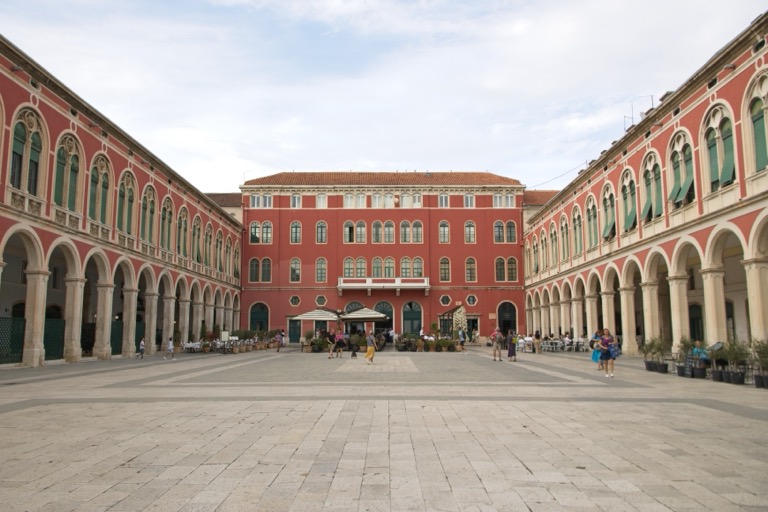
We then returned for lunch on the ship and walk out to the beginning of the dock to meet our guide for a private tour of the UNESCO World Heritage Site Diocletian’s palace which is really the core of the old city of Split.
The palace was built in the 10 years before Diocletian retired. It’s huge, 600 meters by 600 meters.
We first toured the crypts or basement of the palace. This palace is built on a hillside, so only the 150 meters by the sea has a basement. It was used for storage.
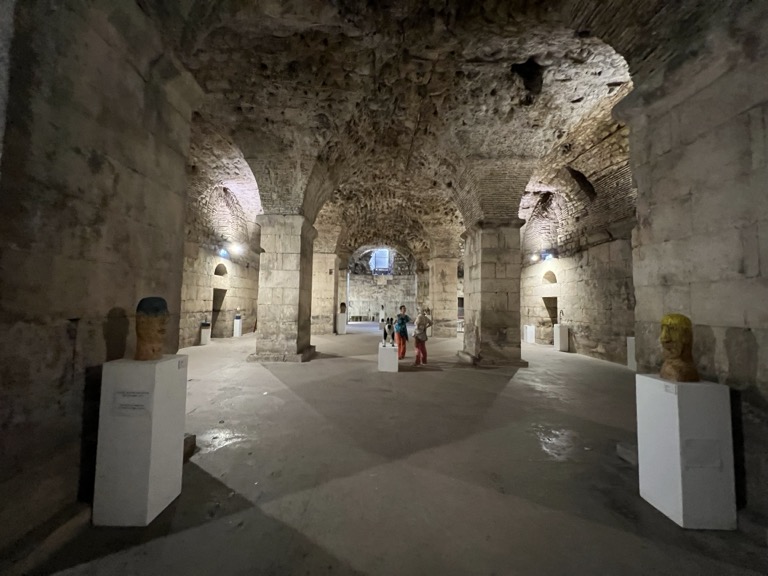
300 years later, in the early 600s AD, after the sacking of Salona by the Slavs, people moved into the palace because it was defensible and cut holes in the floor above the crypts and threw garbage into the basement. This prevented the crypts from being modified like everything above. The crypts have been mostly cleaned out and restored except when that would destabilize a house above.
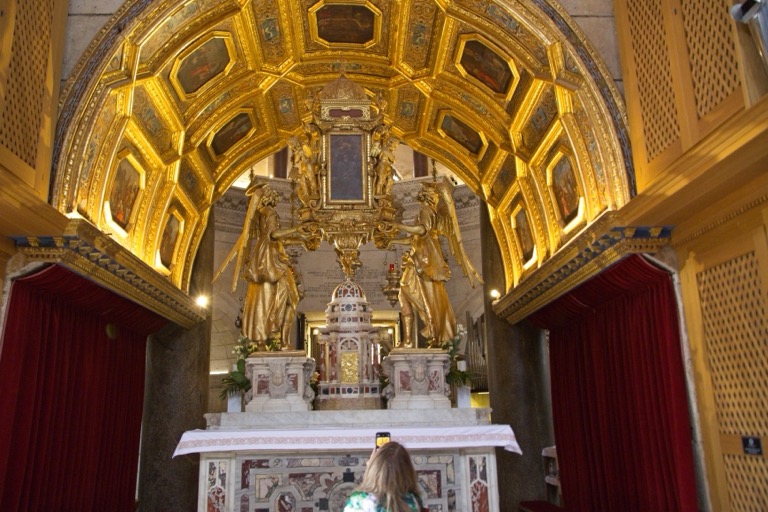
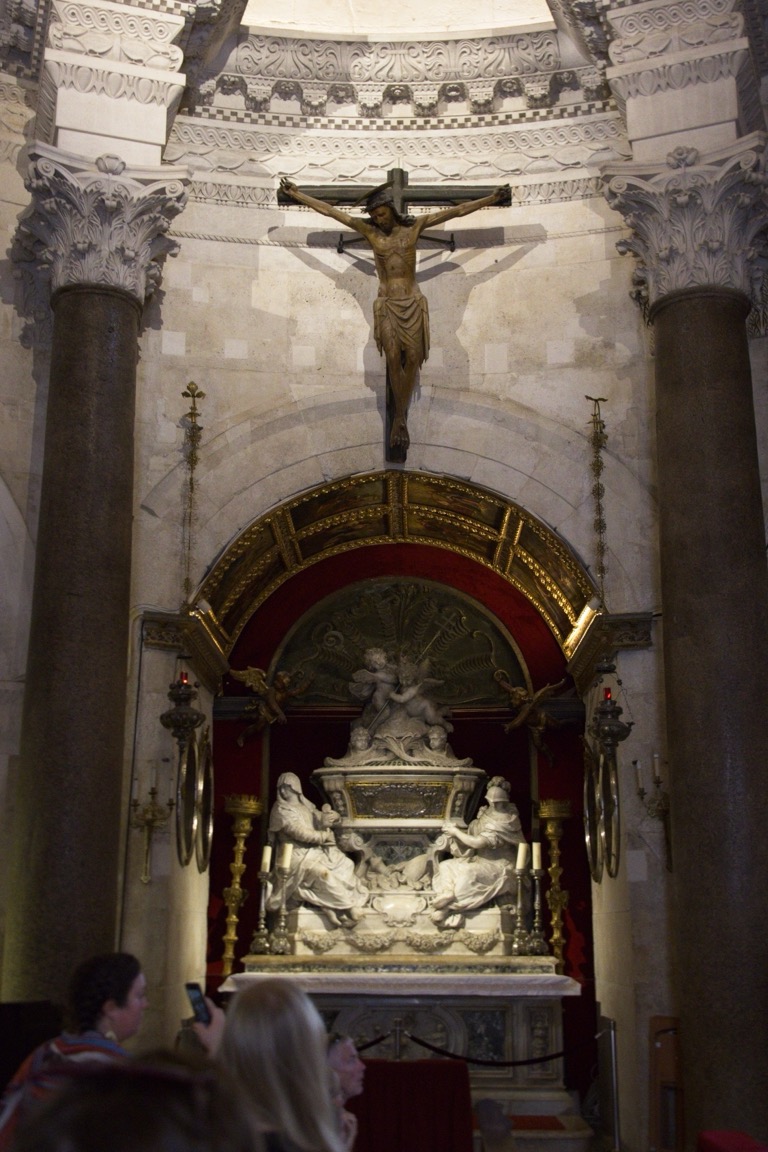
Diocletian was a notable persecutor of Christians. Christianity was allowed by Constantine the Great. Diocletian’s mausoleum was converted to the cathedral of Split by the people of Salona, even though it’s pretty small. Diocletian’s Mausoleum was converted into a cathedral in 653 AD and the remains of one of the saints killed by Diocletian, St. Domnius, was moved from the church at Salona to Diocletian’s mausoleum. Diocletian’s image, statues, etc and name were removed from the palace. It’s quite small, with room for 50 or less people to worship in.
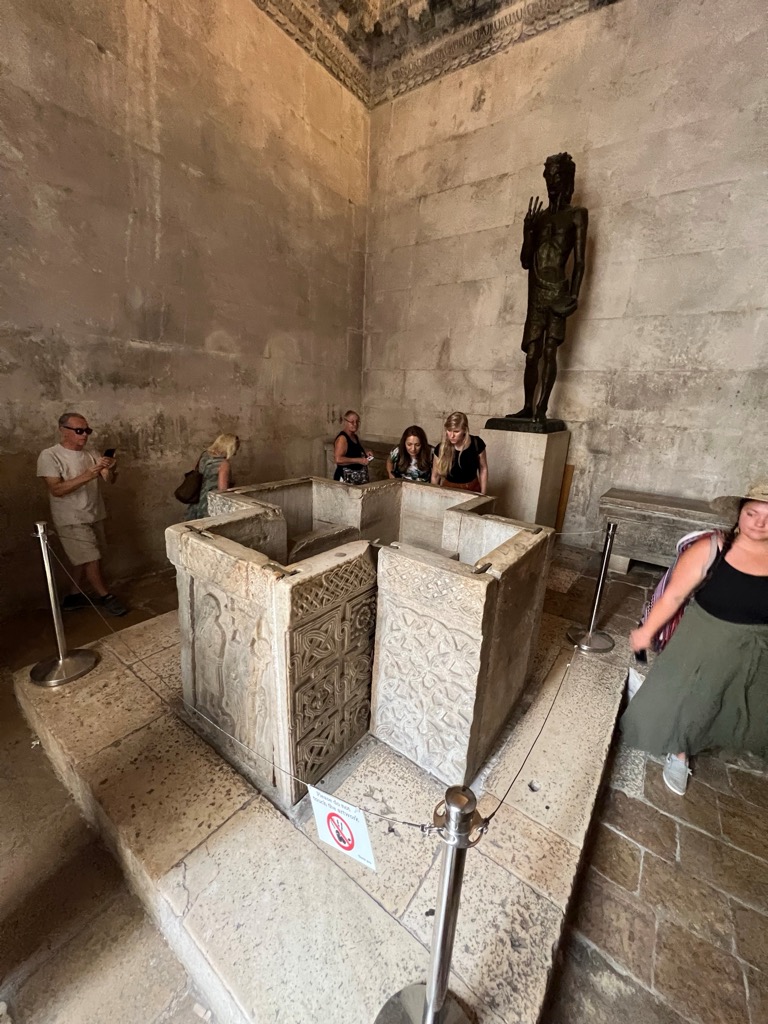
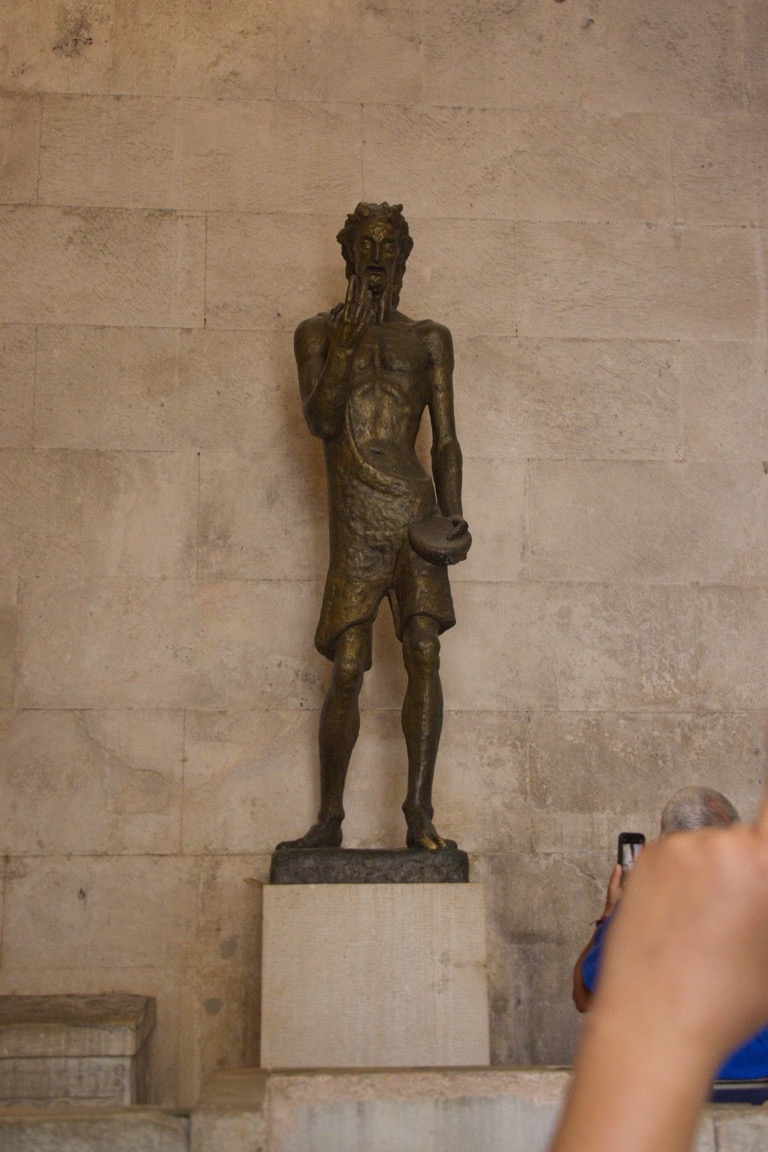
The Temple of Jupiter was converted to a baptistry.
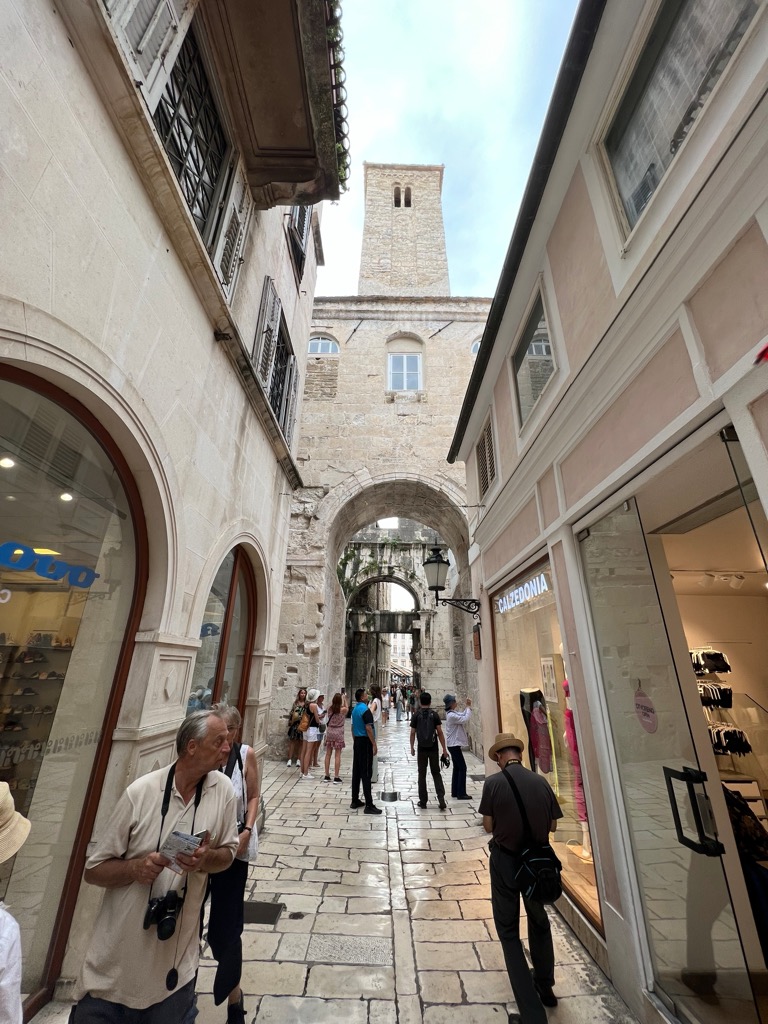
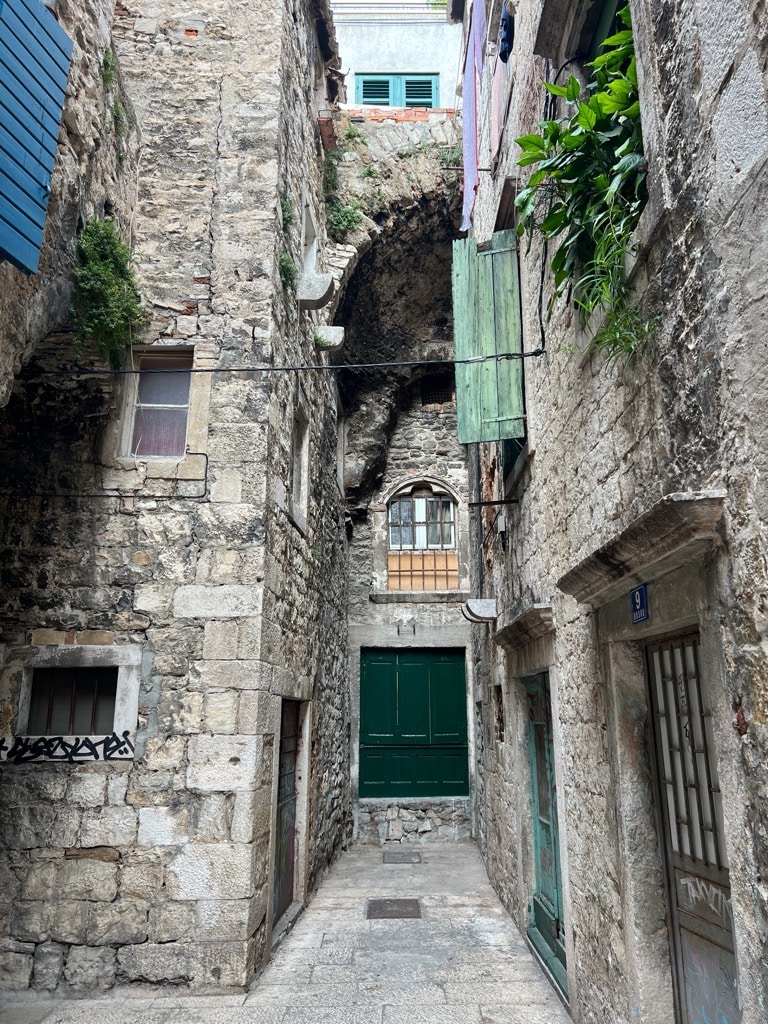
The main east/west street and north/south streets in the palace were 36 feet wide. When it was converted to a city, homes were built or extended into the streets, they are now about 12 feet wide. Some “streets” got pretty narrow.
Shopping along the main east-west street near the east gate.