on
Mykonos
We had booked a tour to Delos from the ship for today. Delos is a UNESCO World Heritage Site.
Delos is a greek city from the 7th century BC. Supposedly Apollo and Artemis were born here. The whole island is devoted to an archeology preserve, so you can only do a day visit.
The ship anchored at 6:30 am outside the Mykonos harbor and we took the tender over to the harbor for our ship organized tour of Delos.
The small island of Delos is near Mykonos but is of greater historical importance. We headed there on a shore excursion first. Delos has no permanent residents today, but archeologists reside there temporarily.
Delos was already considered a sacred place when it was determined to be the birthplace of the Greek gods Apollo and Artemis. Later, temples to Roman and Egyptian gods were also built there. Unfortunately, the museum was closed for renovations when we were there.
Our tour started in the area with the most temples and later went to what was once the residential area.
The Temple of the Delians is also known as the temple of Apollo.
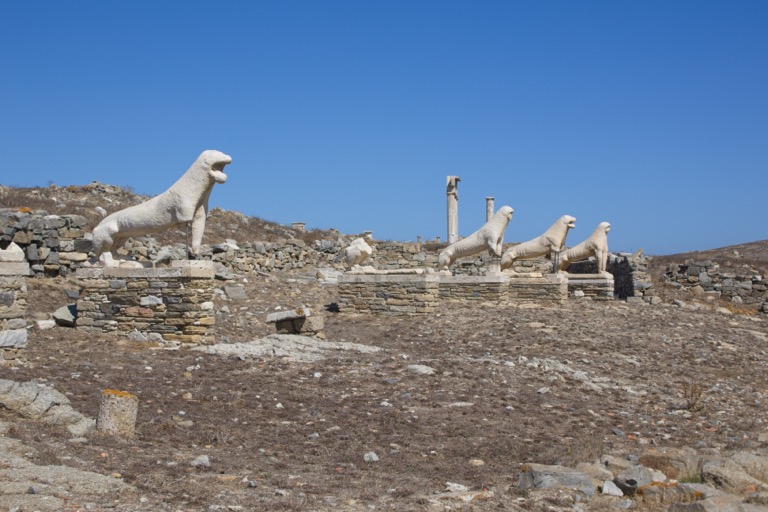
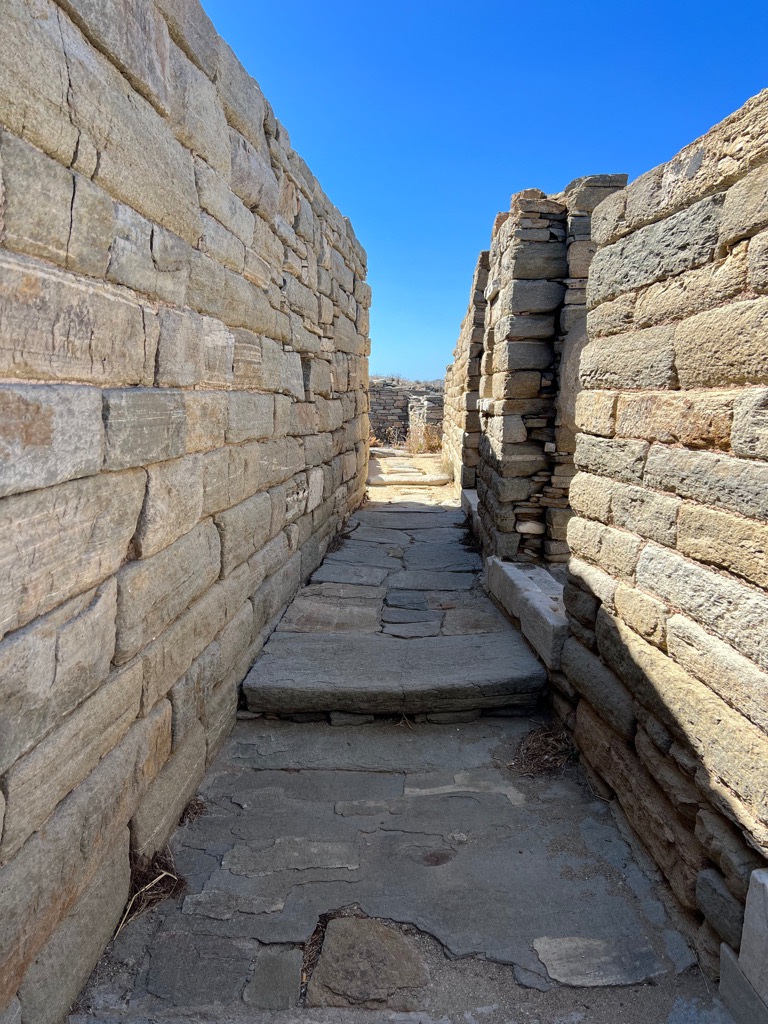
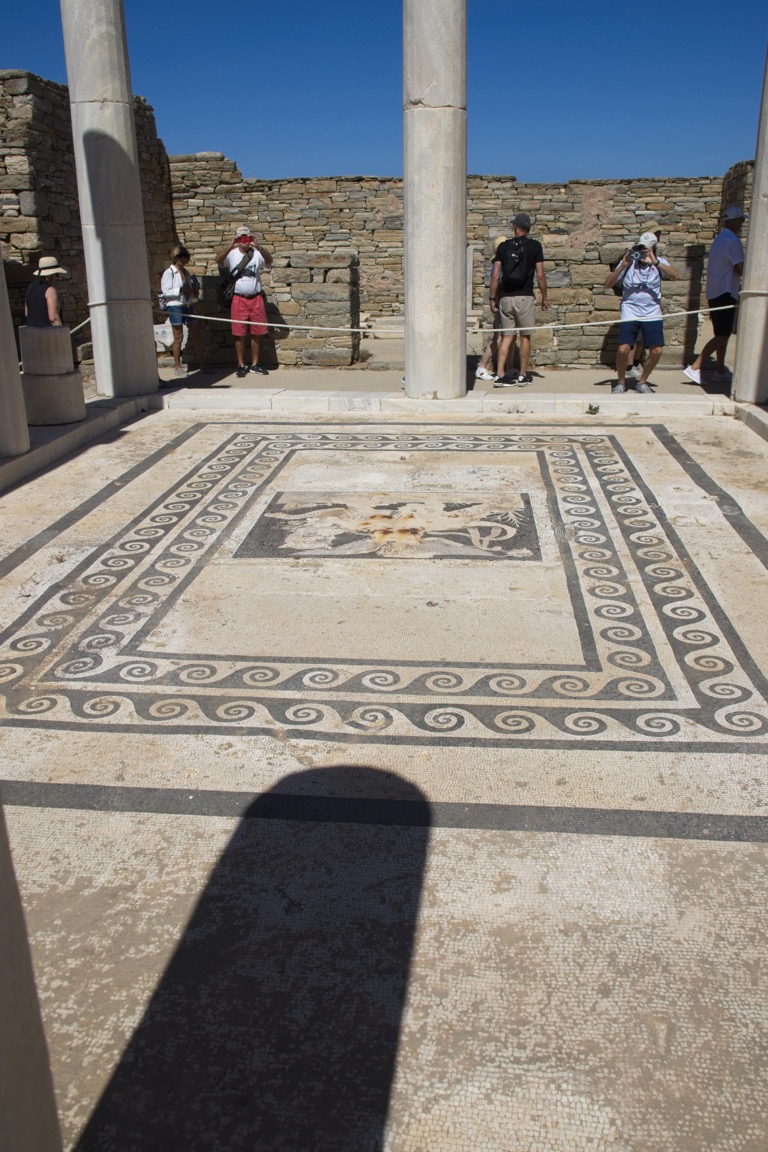
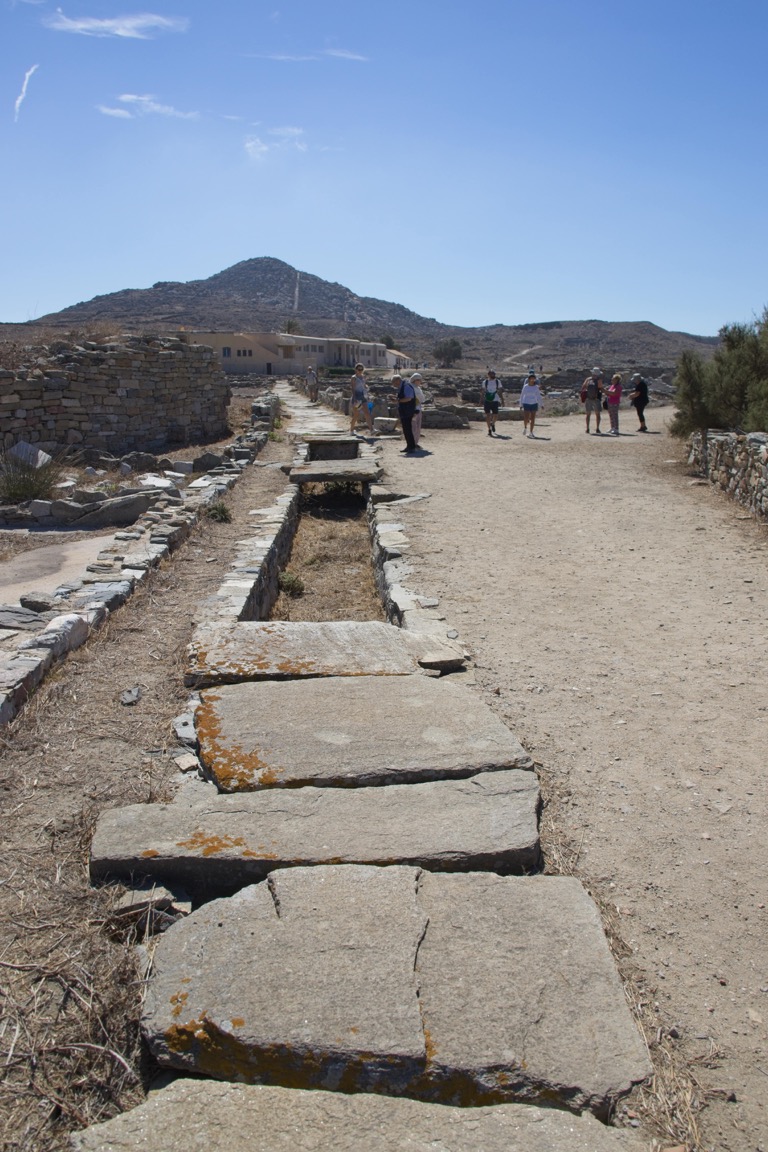
Aqueducts were built to move water, this is from the Roman period.
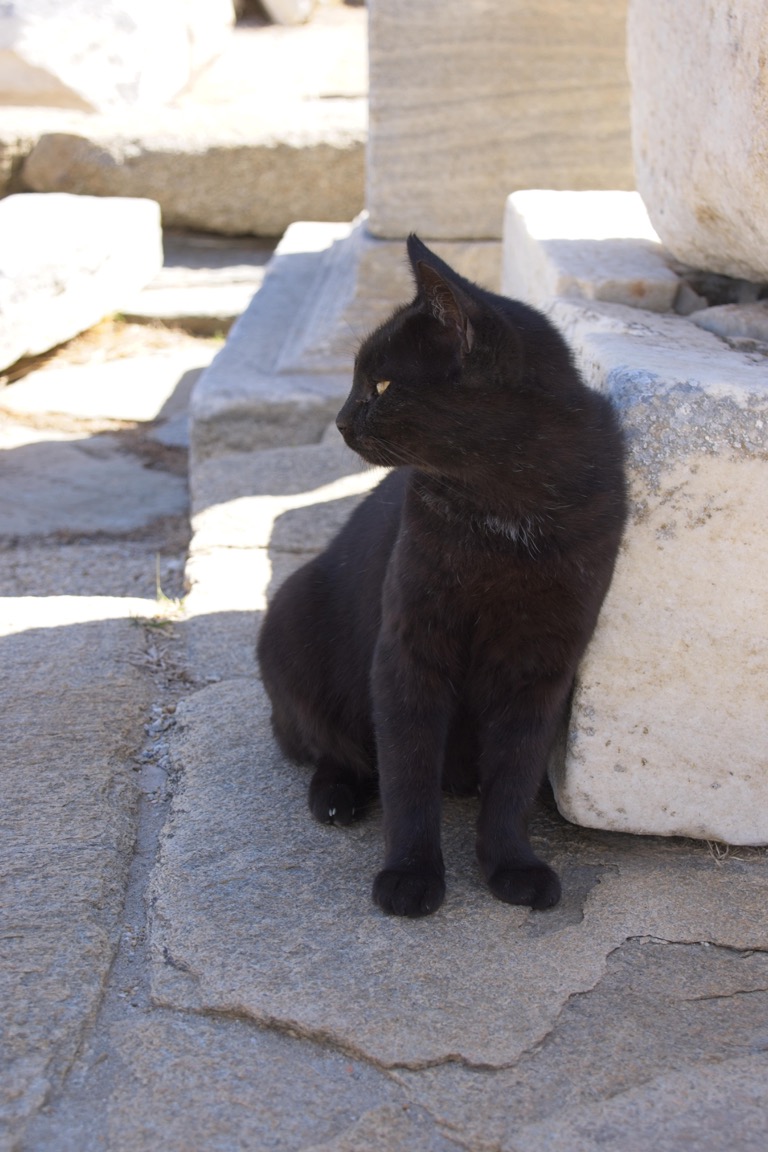
We saw a number of cats who are fed by the tour guides. Some tourists had brought food to feed the cats.
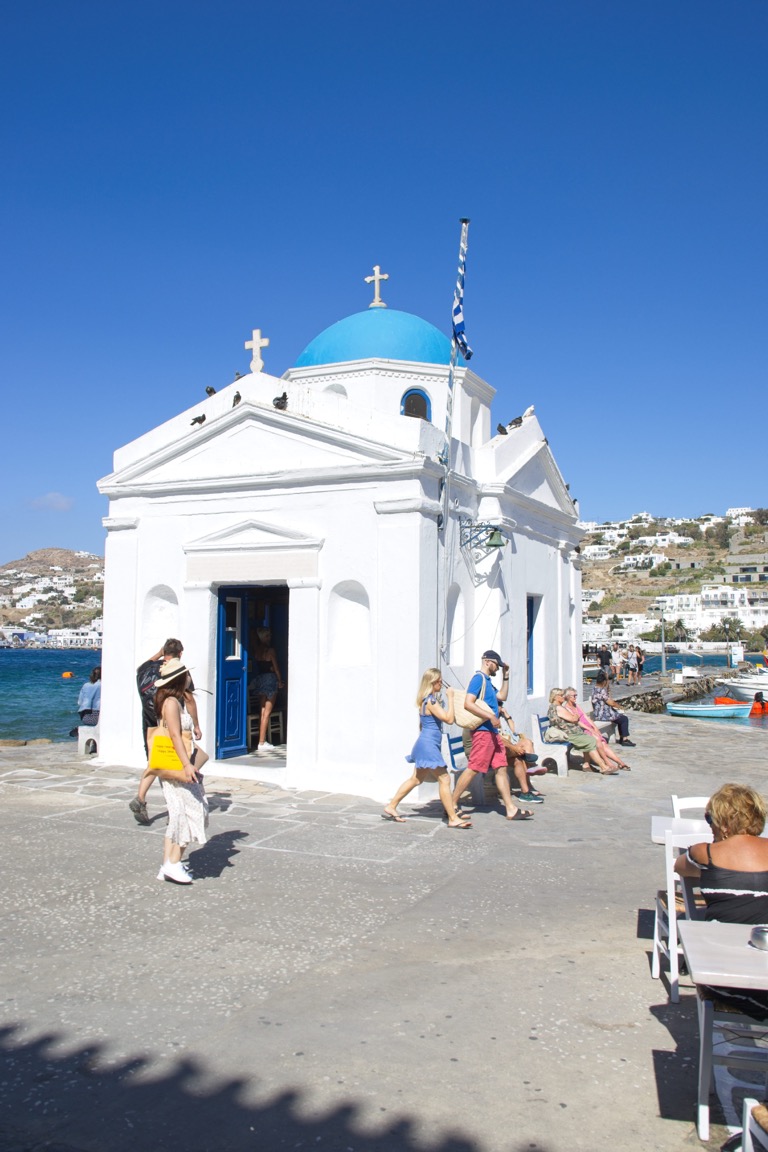
After seeing Delos, we returned to the Mykonos harbor and walked along the shore of Mykonos harbor. There is a St. Nicholas church right on the harbor, St. Nicholas was the favorite saint of sailors. We visited Myra where St. Nicholas served as bishop on our trip to Turkey.
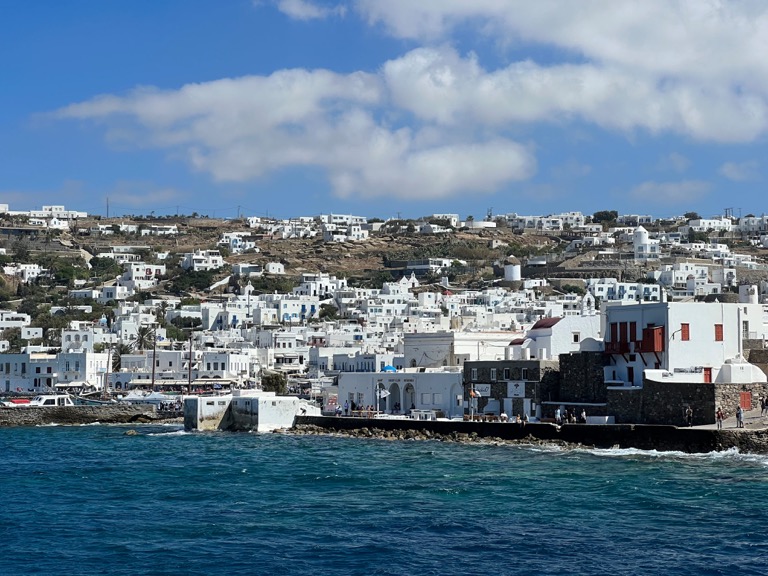
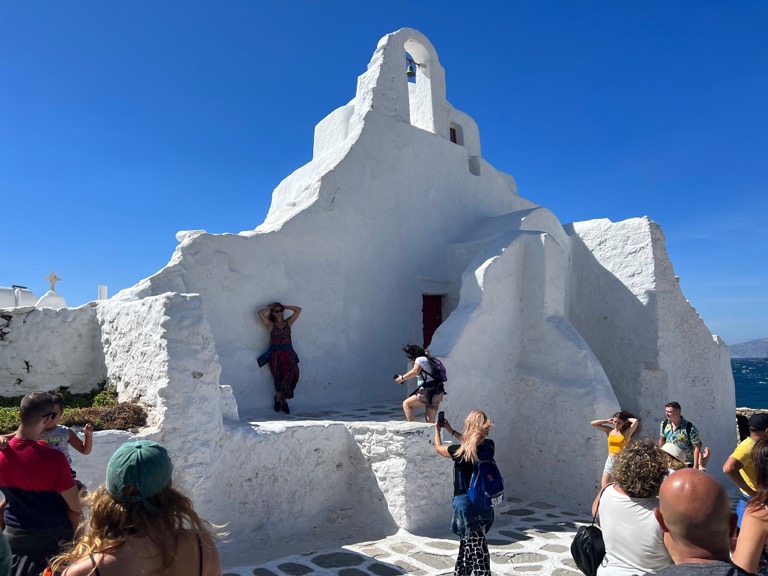
We walked through some narrow sidewalks to the area where the Venetian windmills that were built in the 1500s - 1900s.
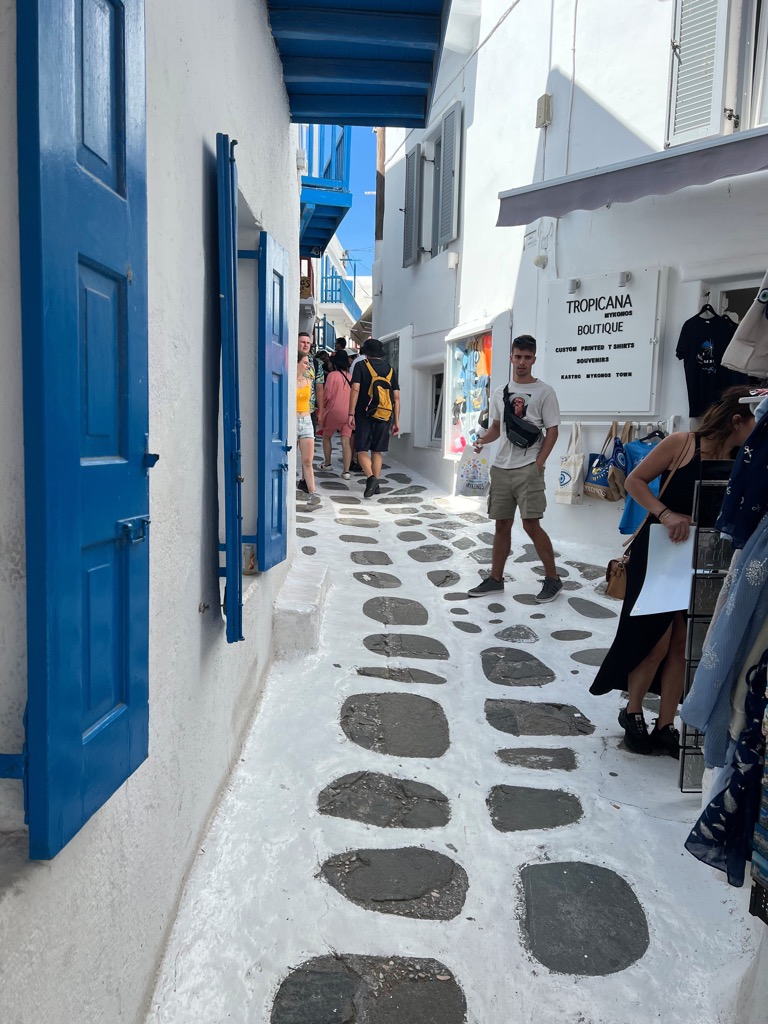
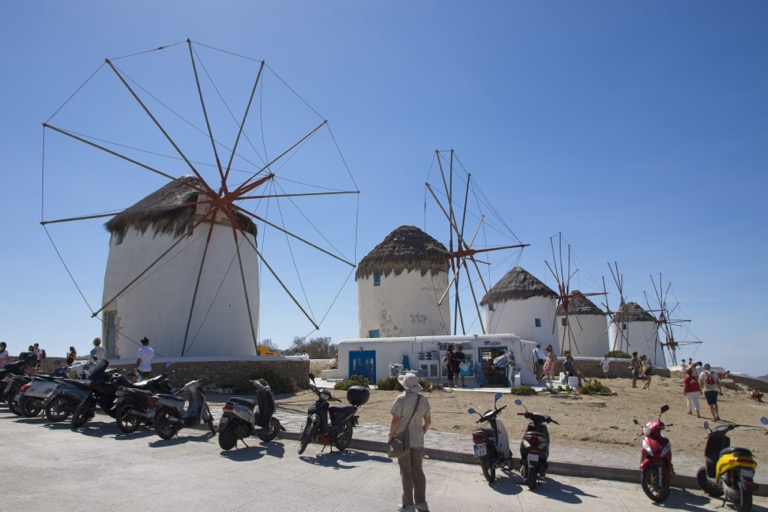
We made it around to the beach and Steve waded into the water. We caught the second to last tender back to the ship.