on
Bratislava Old Town
The morning starts with a talk by the four program directors on the ship about the transition from Communism to Democracy. Three of the Program Directors are from Transylvania, in Romania and one is from Croatia.
The program directors were born between 1981 and 1987, communism fell in 1989.
They talked about parents that suddenly needed to learn how to deal with capitalism like ask for/negotiate salary increases or changing jobs to get better pay.
One of the directors talked about a visit from relatives from Denmark in 1986. He remembered that their phone was tapped for a while around the visit. Another related a story that someone stopped to tie shoe, others stopped behind him. Then others saw a line and got in it not knowing what it was for. Finally, someone in the back started asking and worked his way up to the front to find the real story of the line. The guy who tied his shoe said it was the first time he had been at the front of a line even though the line wasn’t waiting for anything.
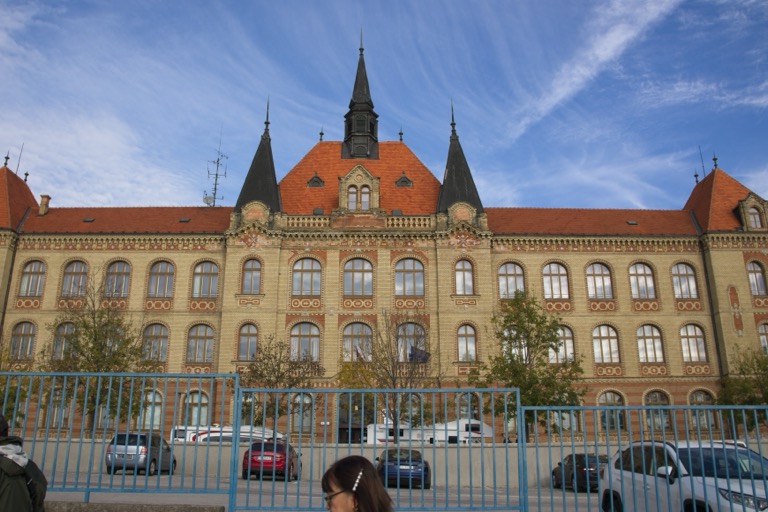
Our ship docked in Bratislava near the Secondary Industrial School of Mechanical Engineering, which is a vocational/technical school.
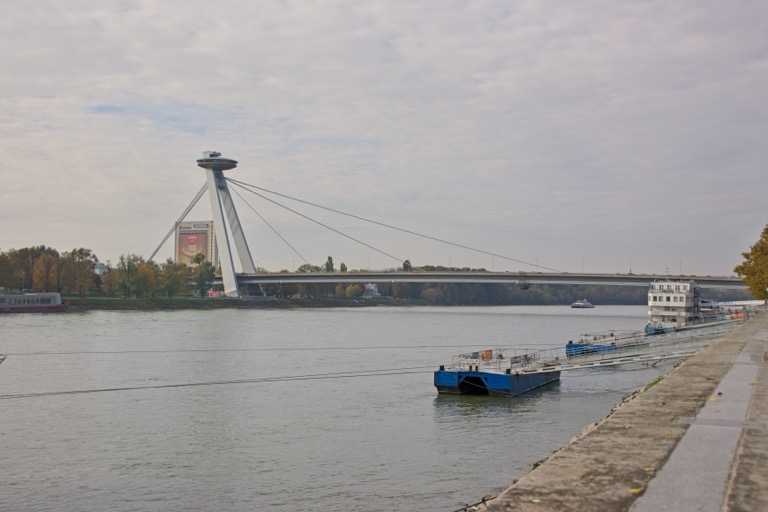
There is a suspension bridge across the Danube that has a restaurant in a dome atop the tower. It’s called the UFO. This is the view from the dock by our ship.
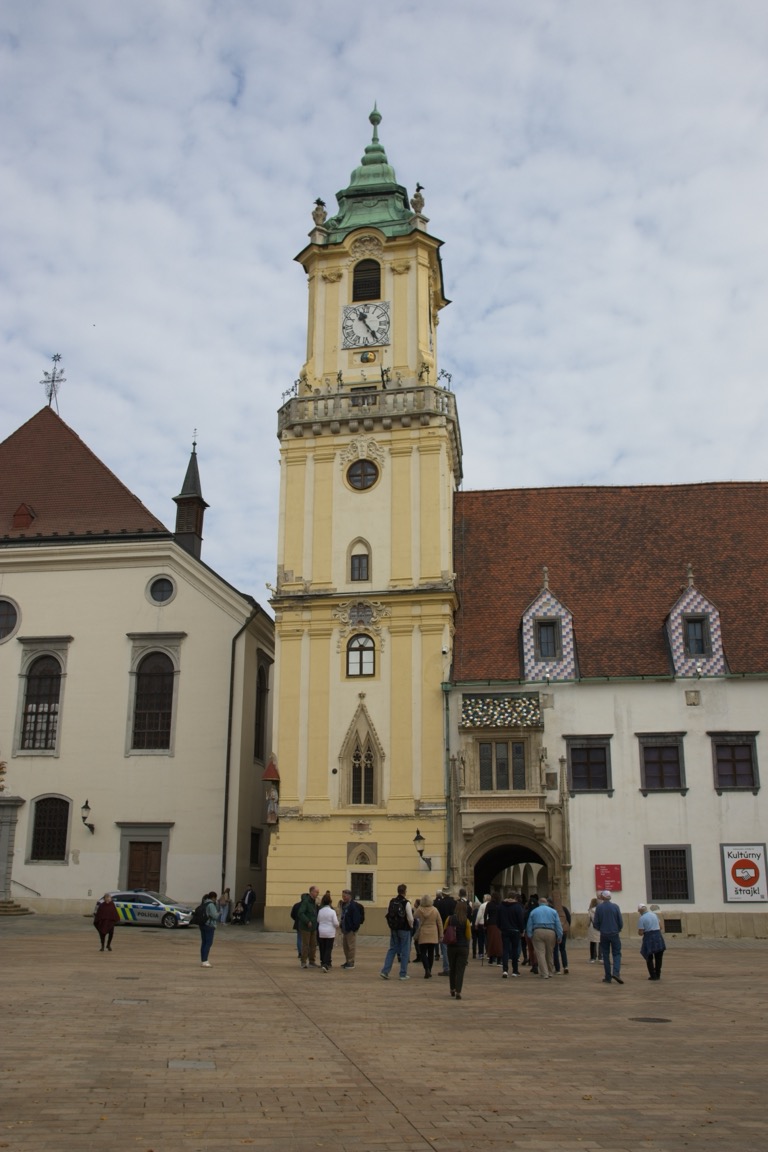
After the communism to democracy talk, there was a walking tour through the old town.
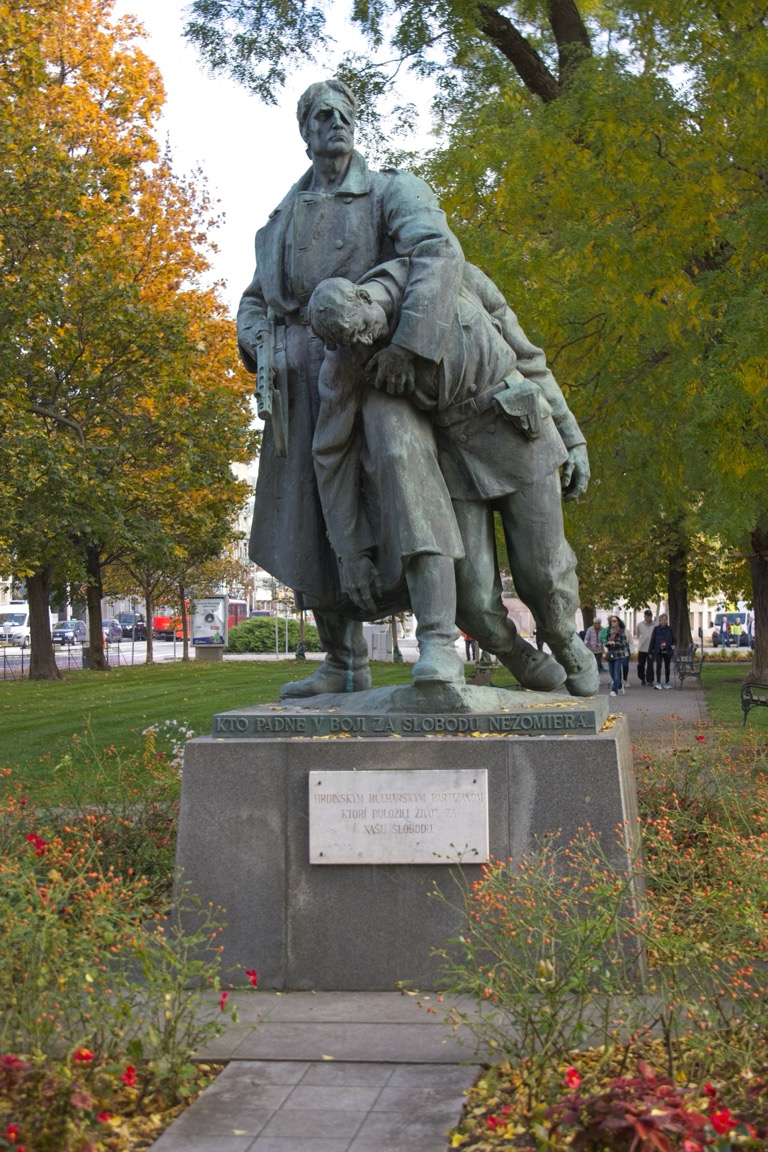
In the park by the dock is the Memorial of the Bulgarian Partisans statue which commemorates Bulgarian fighters who fought alongside Slovaks against Nazi forces during World War II.
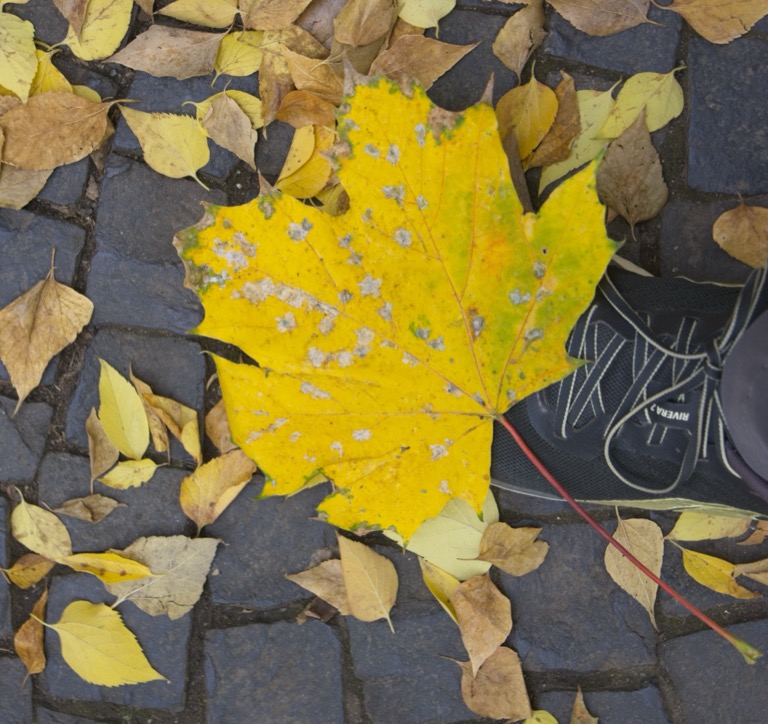
The leaves from the Norway Maple trees were very large.
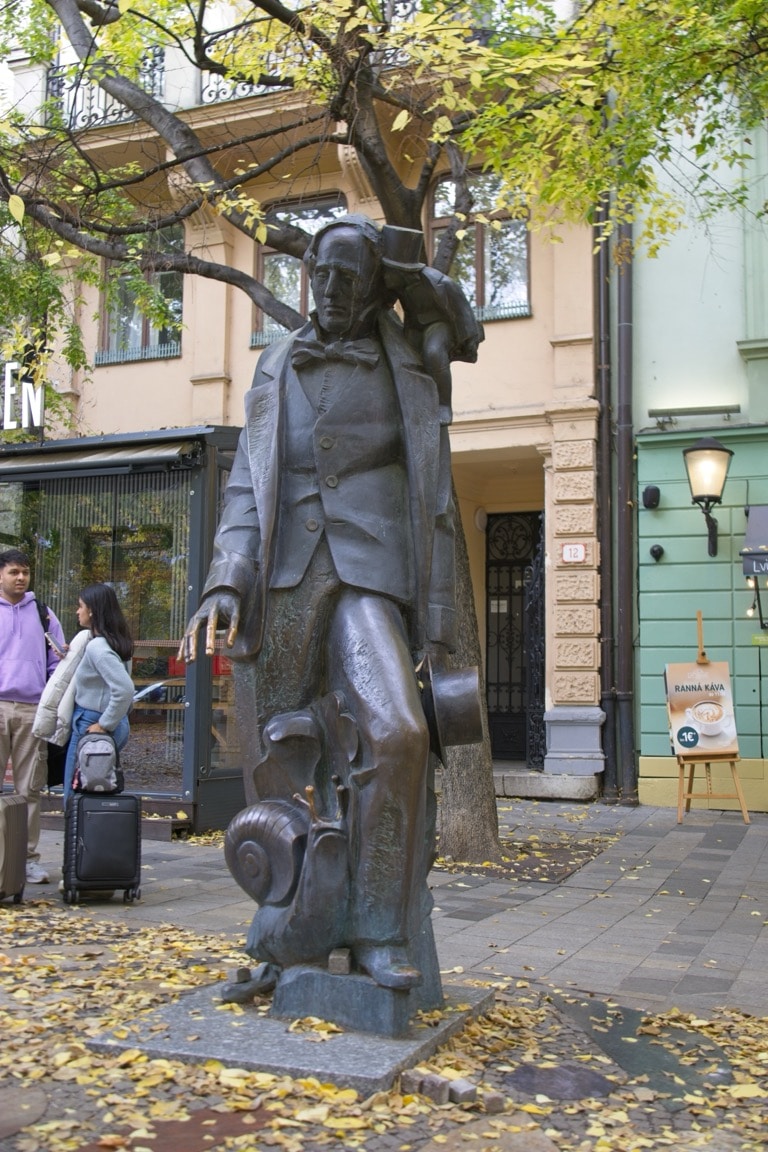
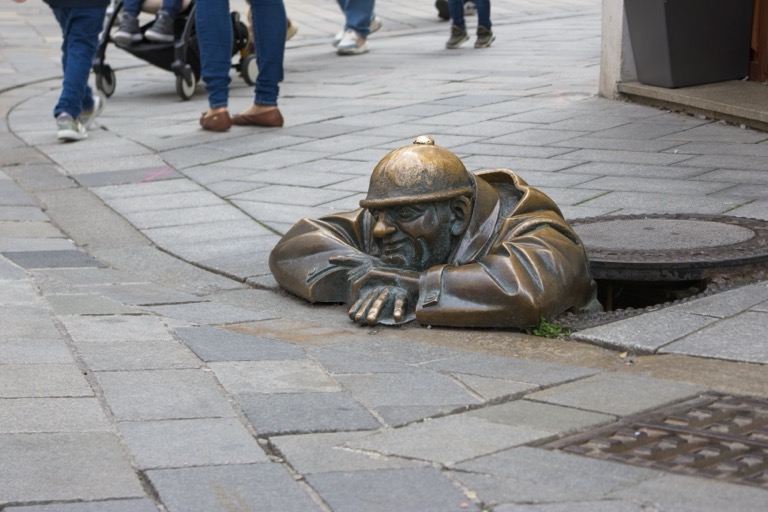
There is a whimsical statue of Čumil (meaning “the watcher”) the sewage worker statue that the guides point out to not trip over.
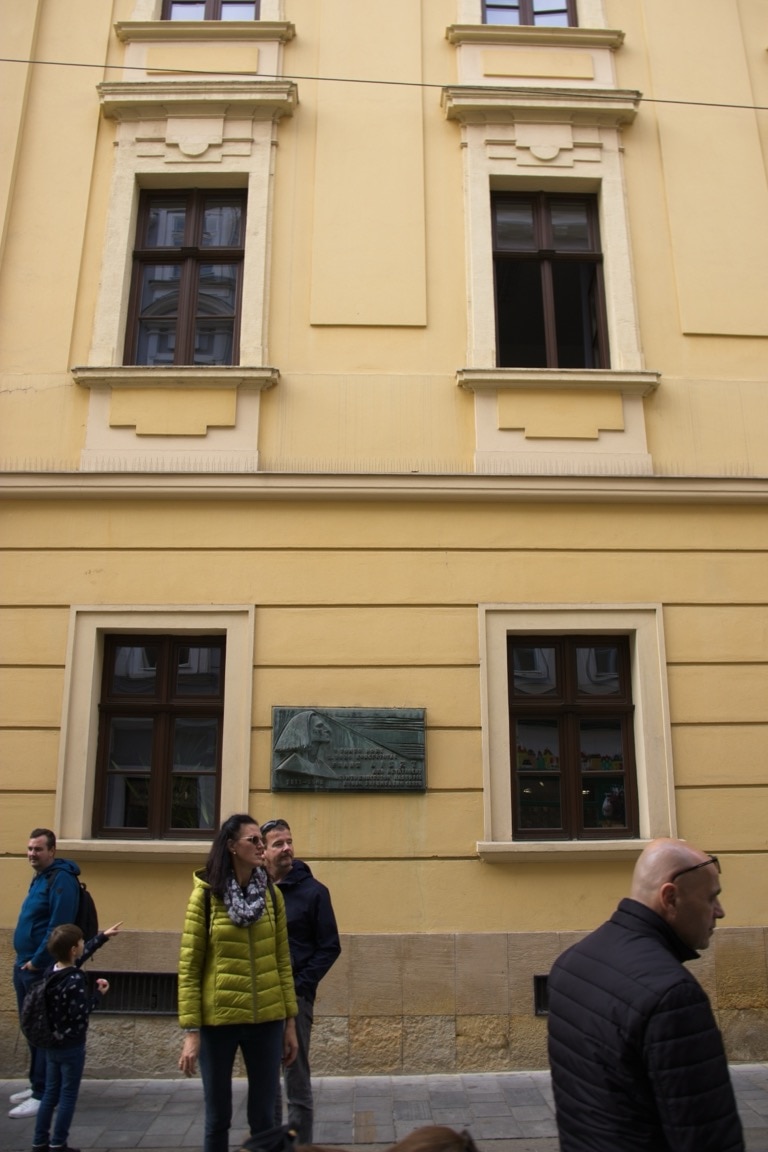
Franz Liszt gave his debut concert in this building when he was 9 years old.
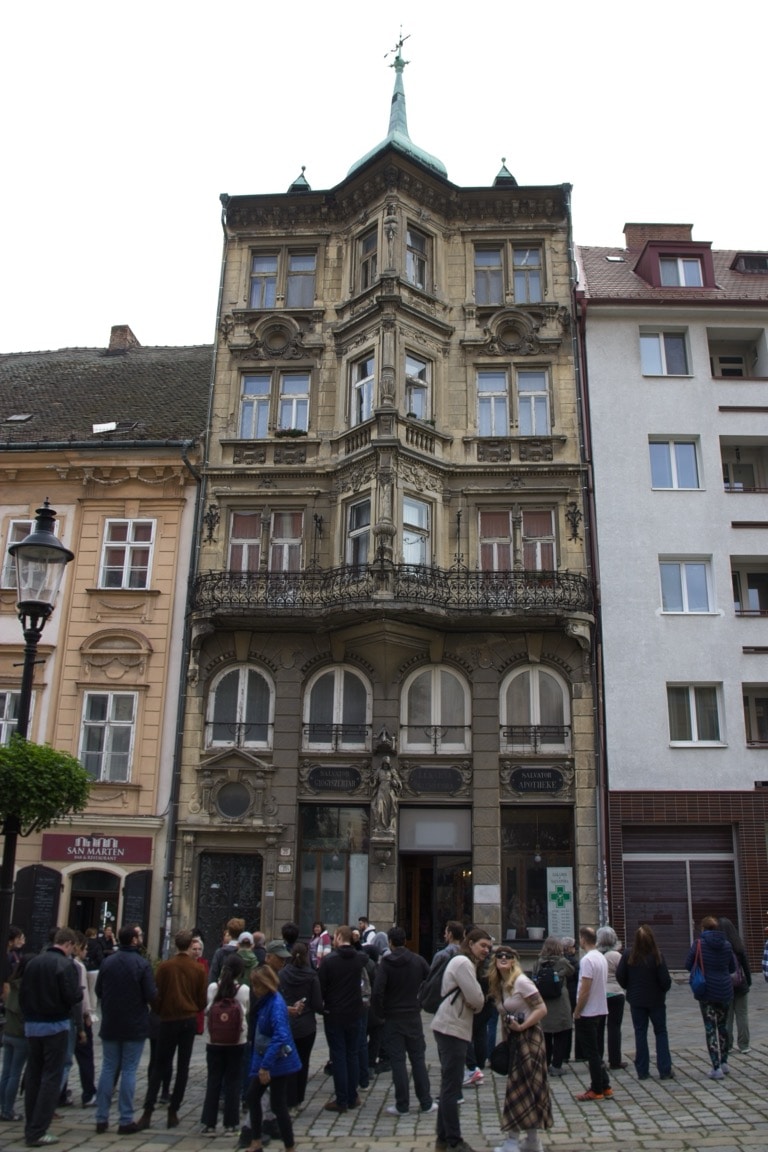
The Pharmacy Salvator was built in 1904, but houses pharmacy cabinets from 1727.
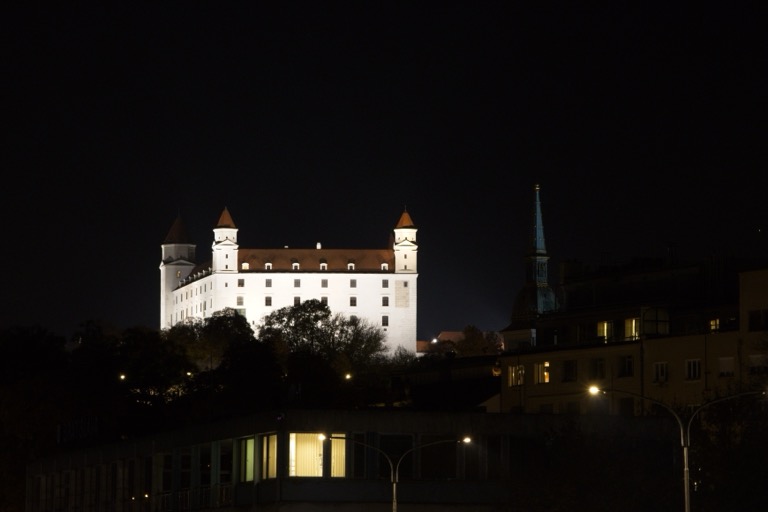
Bratislava Castle was converted to a Royal Residence by Maria Theresa of the Habsburg empire in the 1760s. It burned in 1811 due to carelessness of the soldiers stationed there defending against Napoleon. Restoration started in the 1950s.
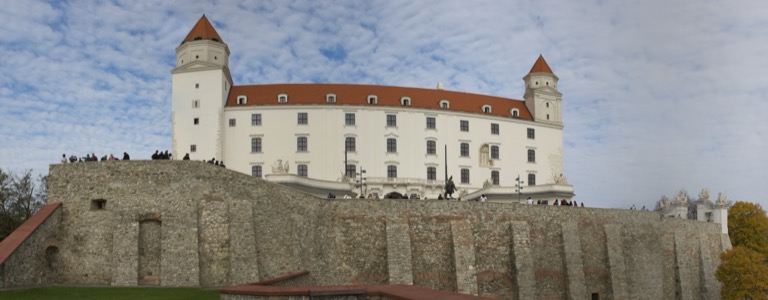
Walked up to castle before coming back to the ship for lunch.
After lunch, we walked over and toured St. Martin’s Cathedral. It was the coronation site for Hungarian kings from 1563 to 1830. The cathedral is named after St. Martin who was from the area and the third bishop of Tours, France in 371.
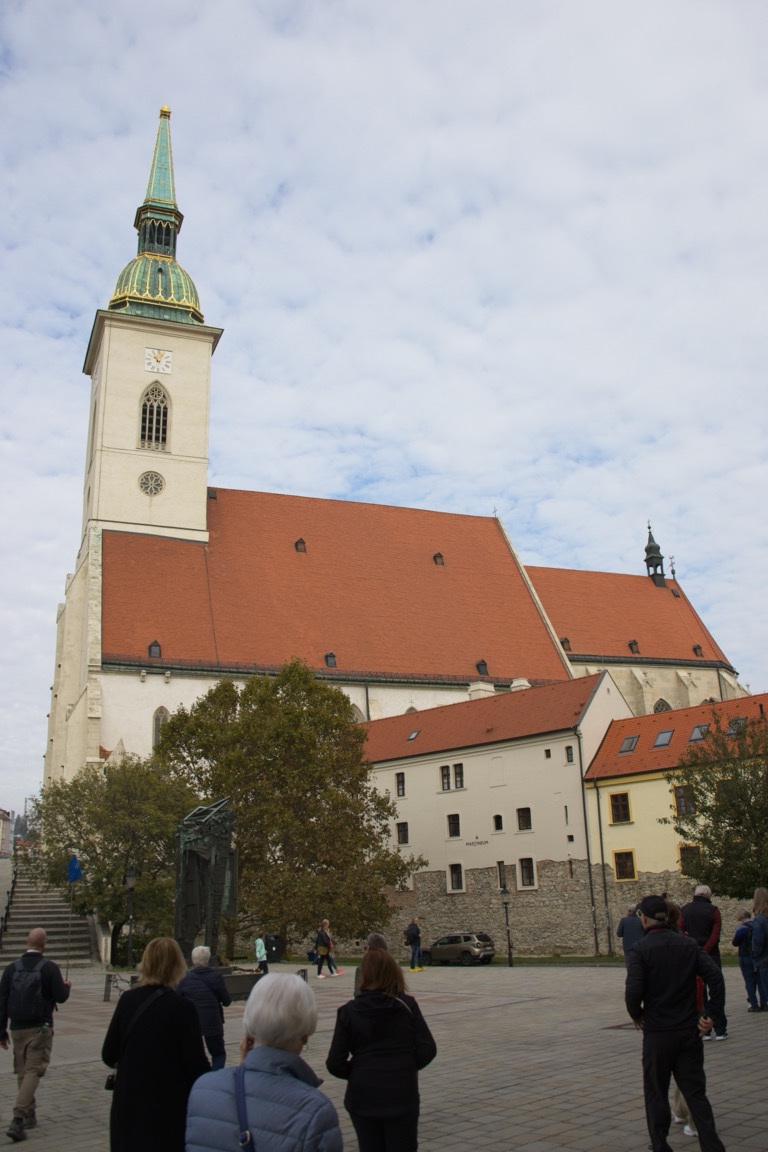
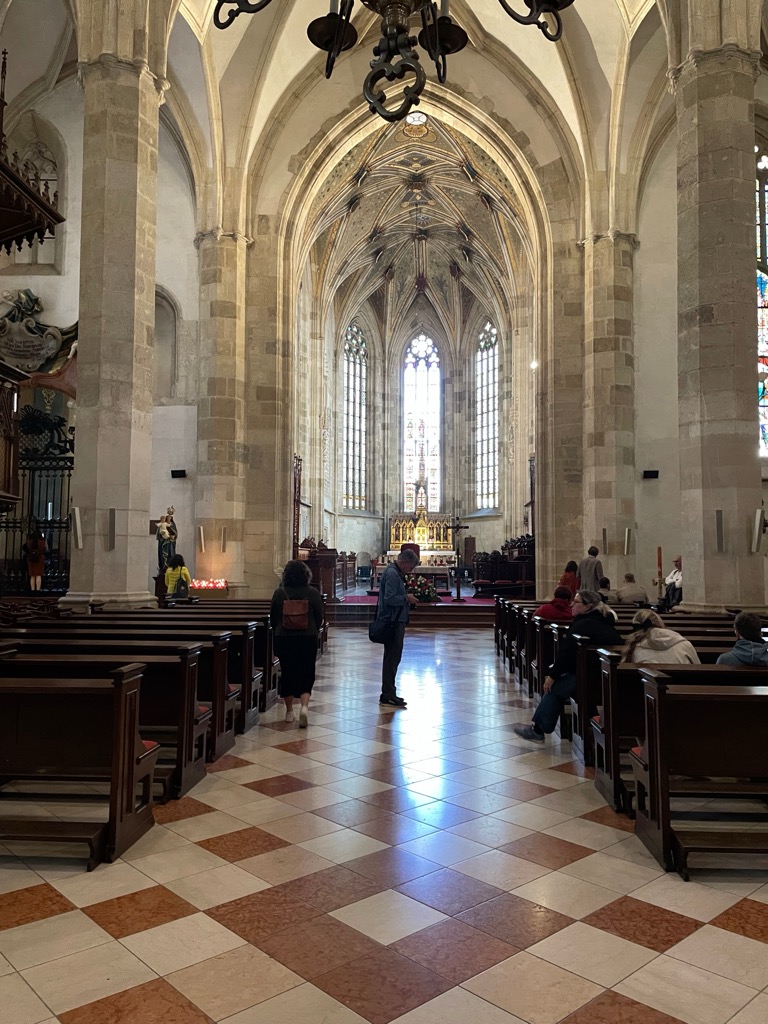
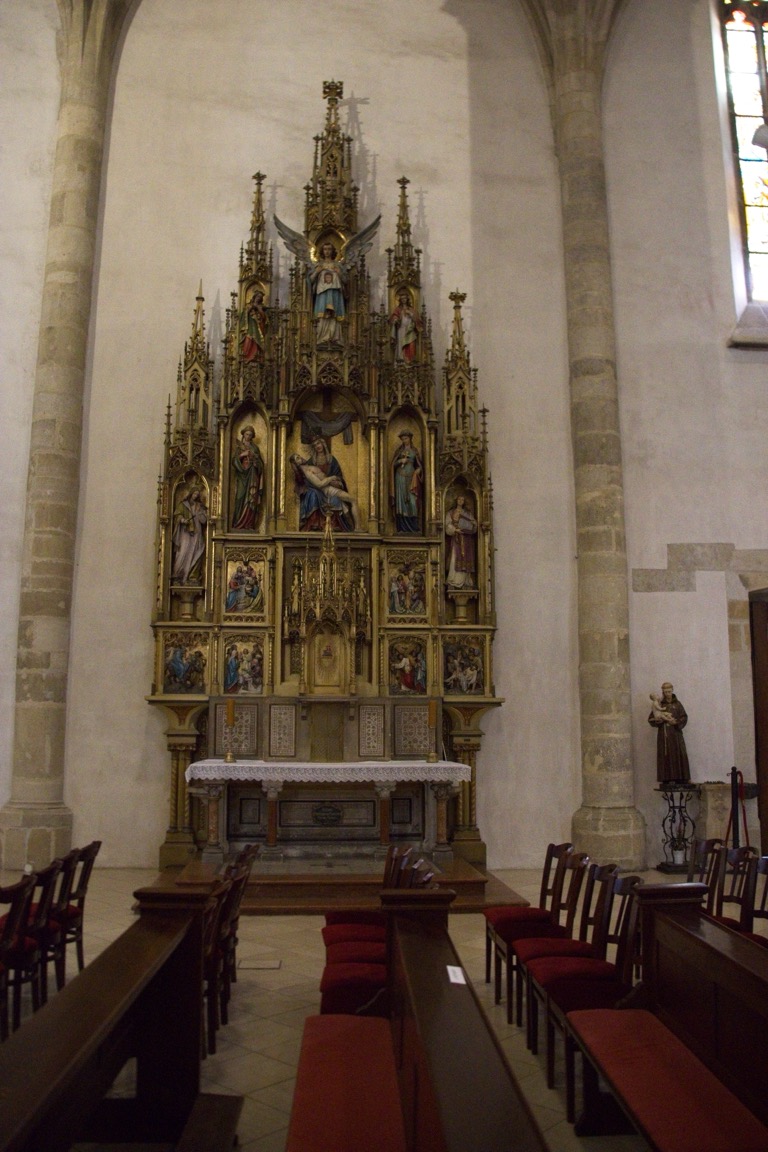
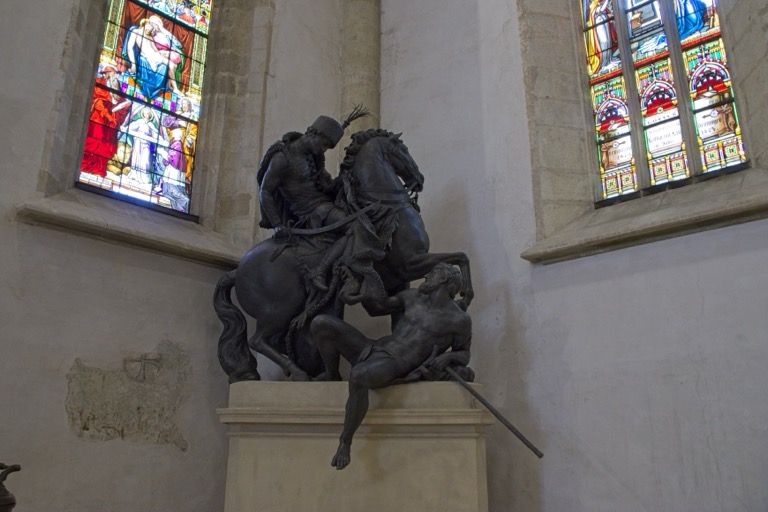
Tried to walk to the parliament building but not enough time as we had to be back on the ship for our visit with a local resident.
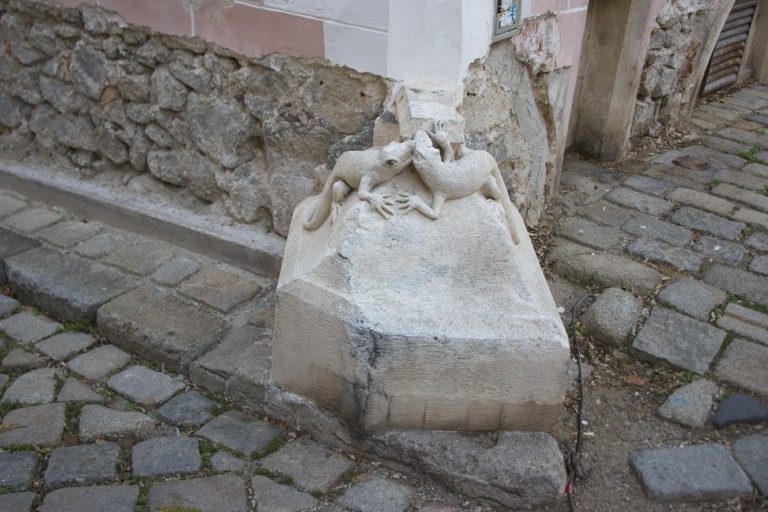
These stone lizards look old, but are from the 1980s when the street was redone. They were removed in the early 2000s and recently reinstalled.
Our tour company arranges visits with locals, either for a meal or tea. It’s a chance to see how the local people really live and ask questions. Our small group visited a woman that worked part-time as a tour guide. She had worked for the EU for many years, so had health insurance and a pension through the EU. The building she lived in was very plain, concrete on the outside, but was nicely renovated inside.
A Slovak folk music group came on the ship after dinner and sang and danced for us.