on
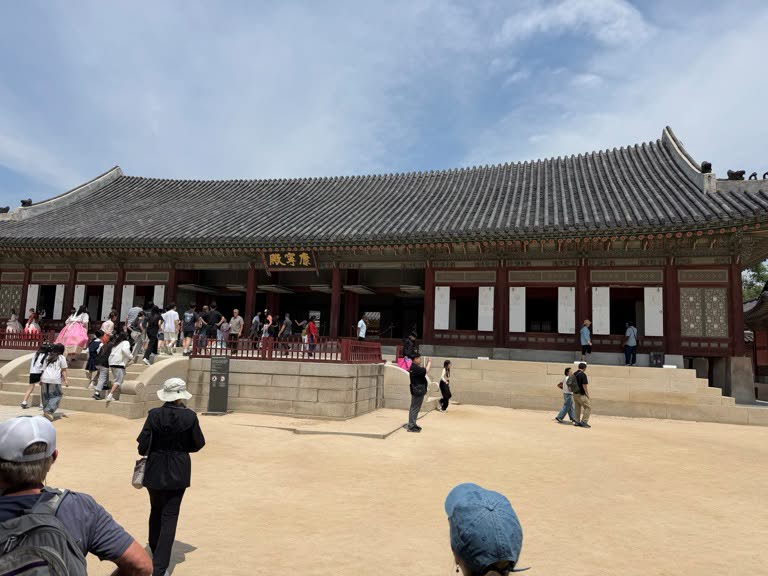
Gyeongbok Palace
Today we start the official tour with the welcome briefing.
Our guide wore the traditional hanbok garb for the briefing and the tour of Gyeongbok Palace also known as the Northern Palace. You get in free when wearing a hanbok, and there are numerous rental shops around the palace. So you’ll see foreigners wearing them as well. The 14th-century Gyeongbok Palace is the largest of the “Five Grand Palaces” of Korea’s longest ruling family, the Joseon Dynasty.
There is a statue of King Sejong the Great in a square outside the entrance of the palace. He enlarged the palace to it’s current size, but the buildings have been destroyed several times since then.
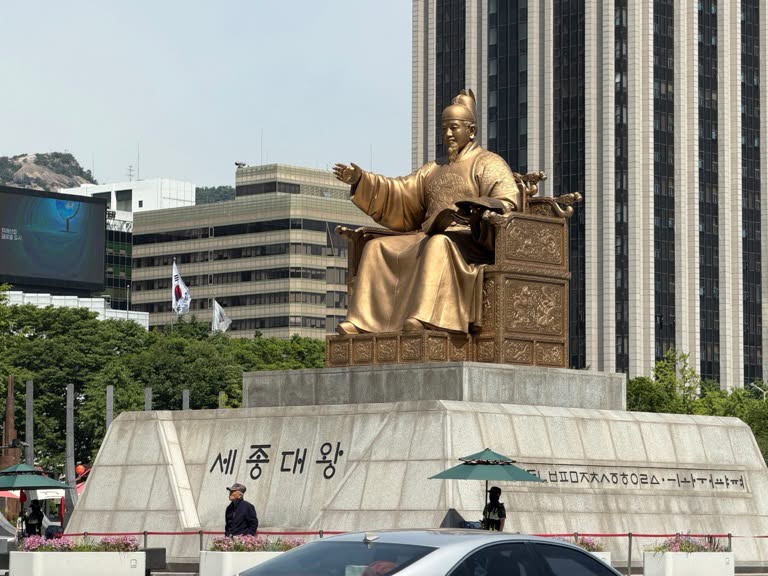
He was the third son of previous King who deposed the oldest son as the crown prince and selected Sejong instead of the 2nd son. He really tried to be a good king for the people. He had a love of mathematics when it wasn’t considered a suitable topic for court officials to study. He invented some astronomical instruments.
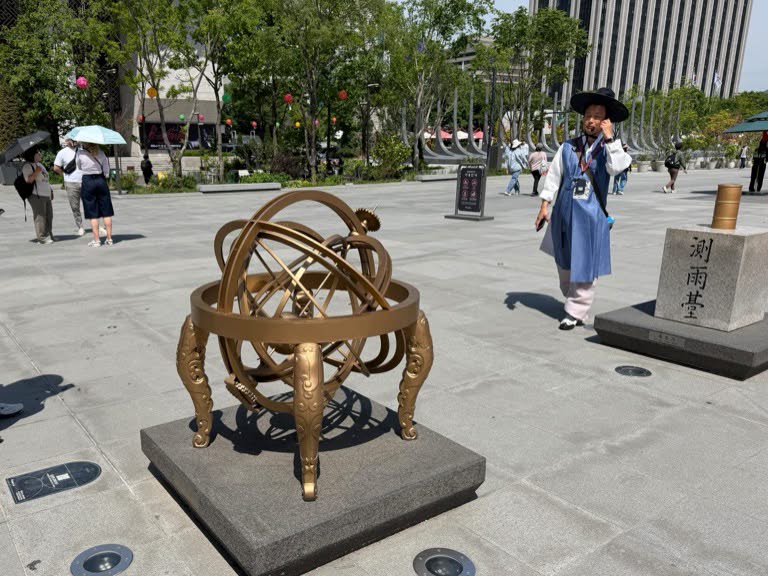
He also commissioned and personally worked on the creation of the Hangul alphabet that is used today for Korean.
We first stopped outside the palace entrance for the changing of the guards ceremony.
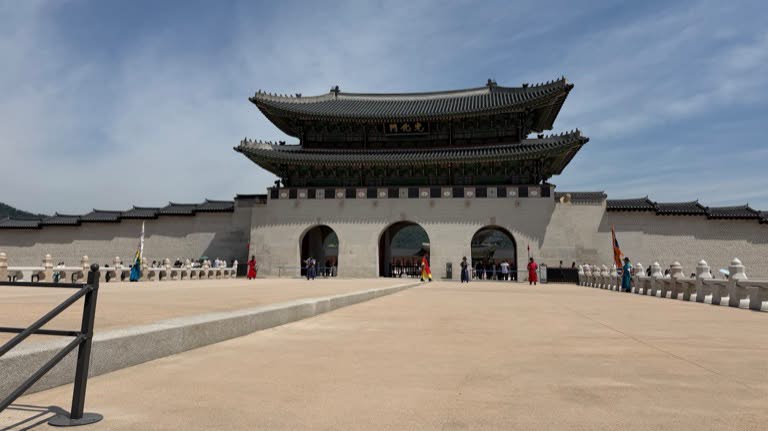
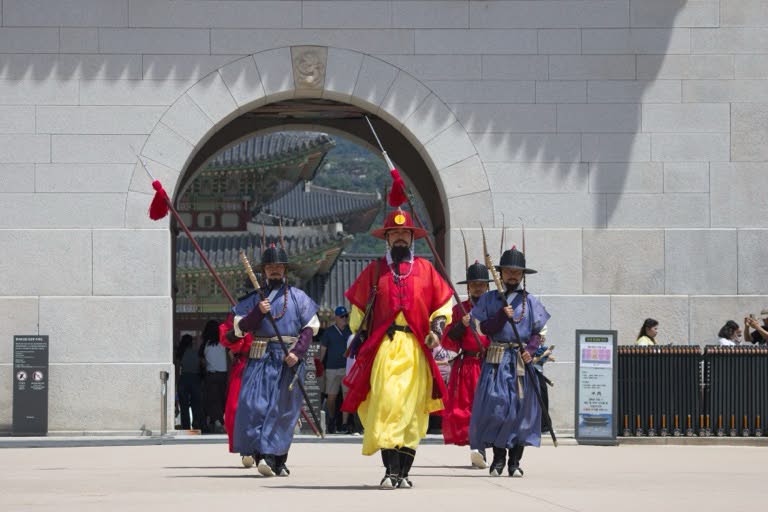
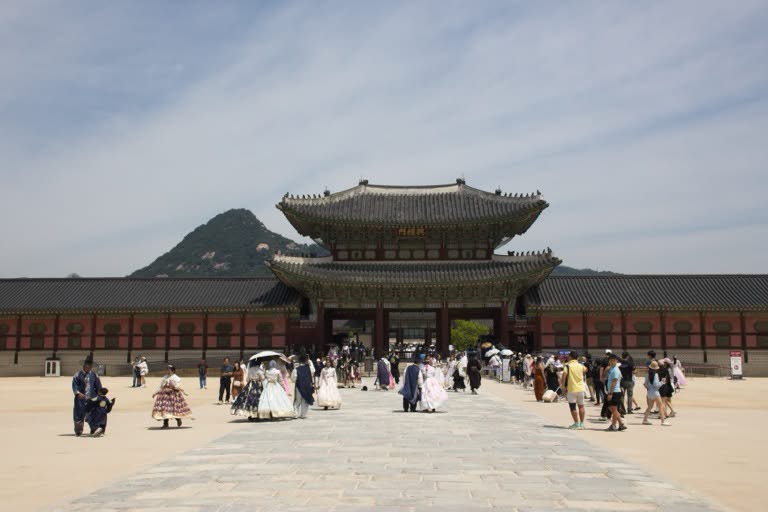
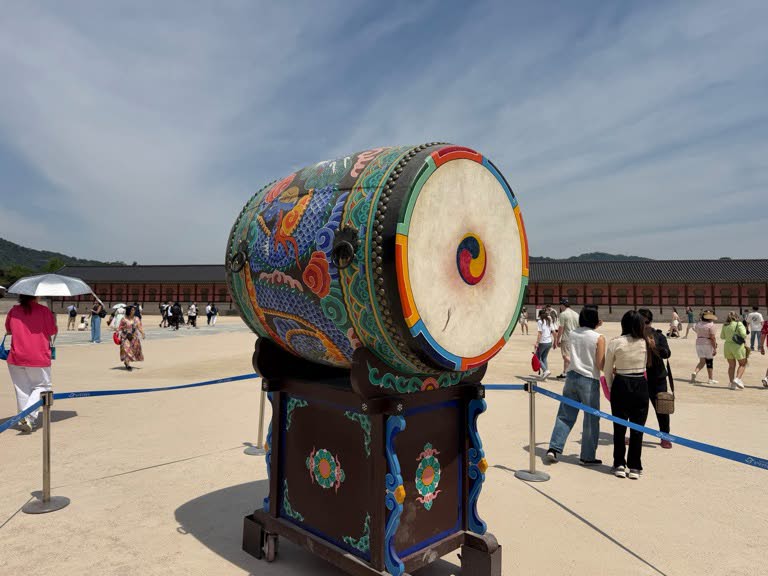
There was a drum near the entrance that commoners could beat to request that a grievance be heard by the court officials.
The King’s bedroom didn’t have a spine on the peak of the roof, as it’s called a dragon spine. Their belief was when the Queen conceived a dragon would come down to inhabit the child and if there was a dragon spine on the building the dragon might be confused and go there instead of the child.
We had lunch at a Samgyetang restaurant. It’s ginseng chicken soup, with a whole young chicken stuffed with ginseng, vegetables and rice and cooked in an individual pot.
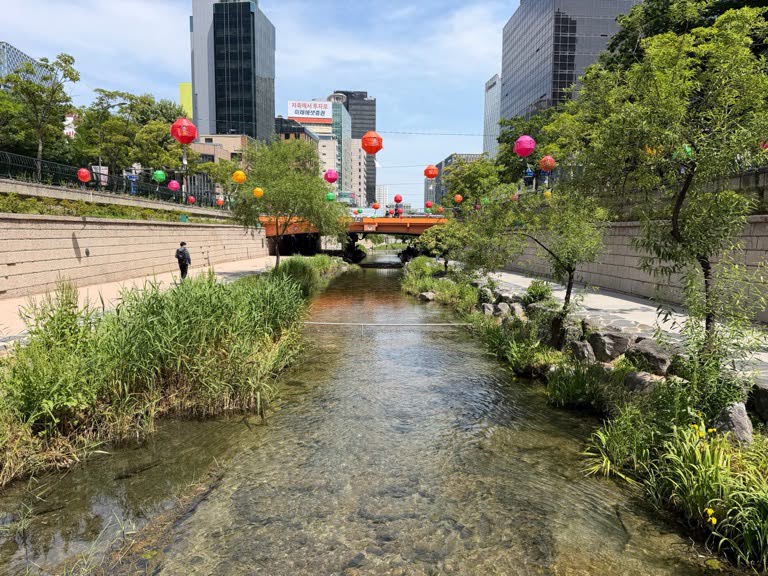
After lunch we elected to skip the bus ride back to the hotel and walked a few blocks over to Cheonggyecheon Stream and walked along it for 5-6 blocks. The western end of the stream had some floats from the Lotus Lantern parade two days ago.
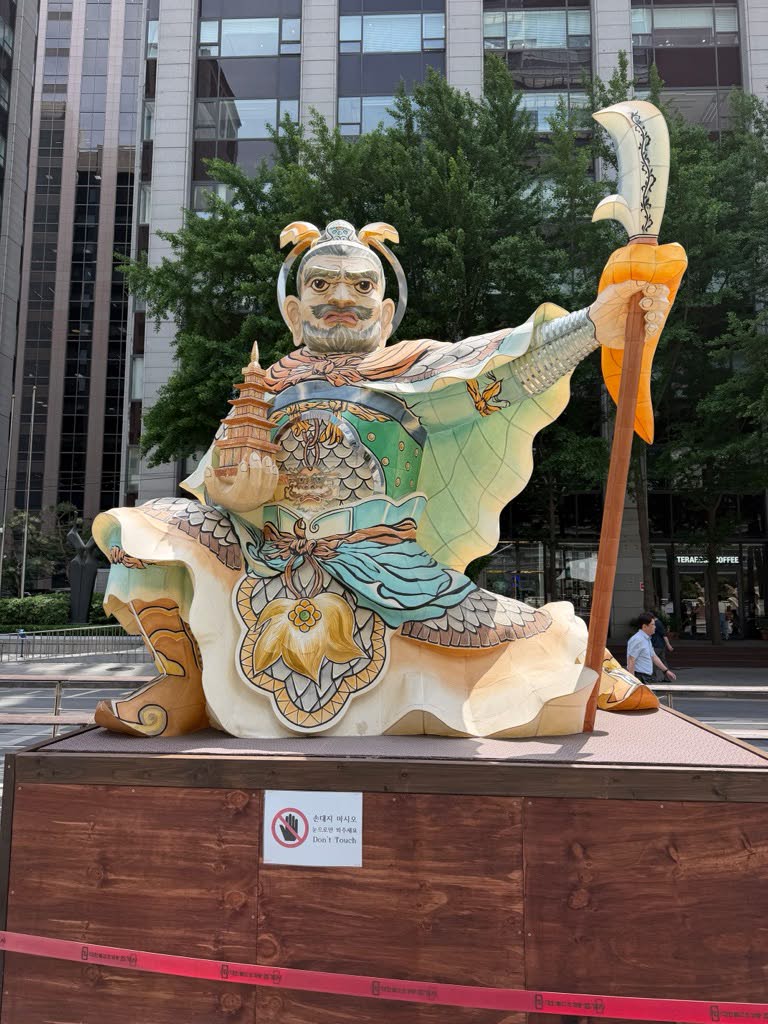
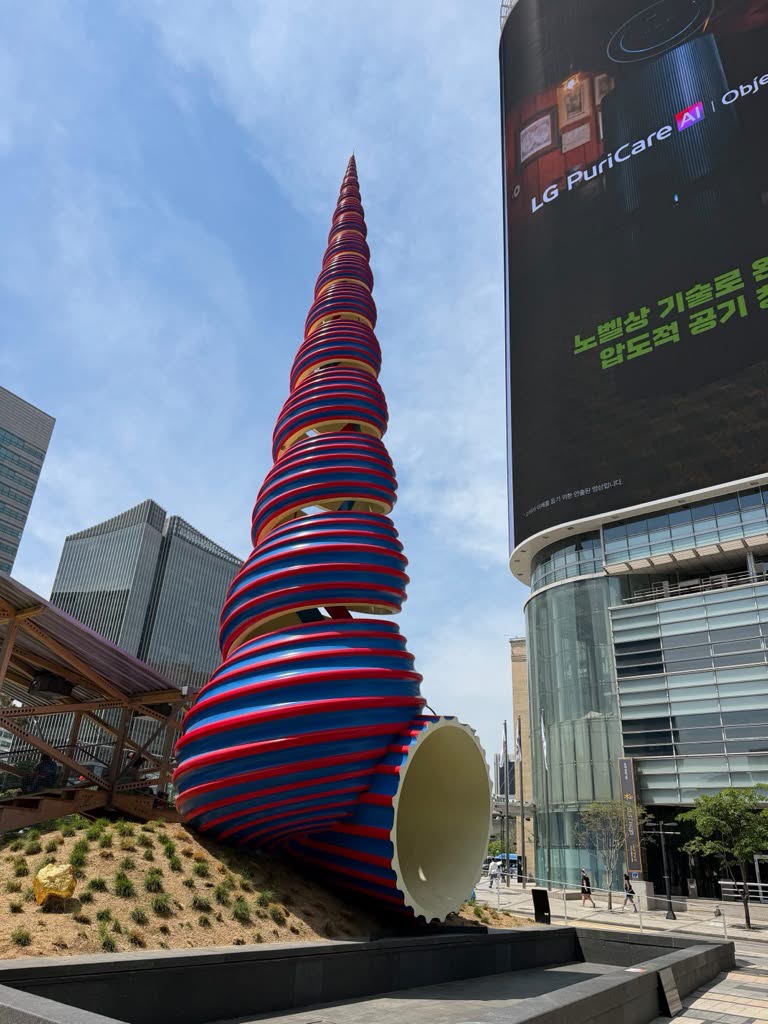
It also had some sculptures and very large screens on the buildings in the area.
The Seoul tourism mascot is called Hechi, he appears many places throughout the city. The city is creating an animated cartoon series based on him called My Secret Friend, Haechi.

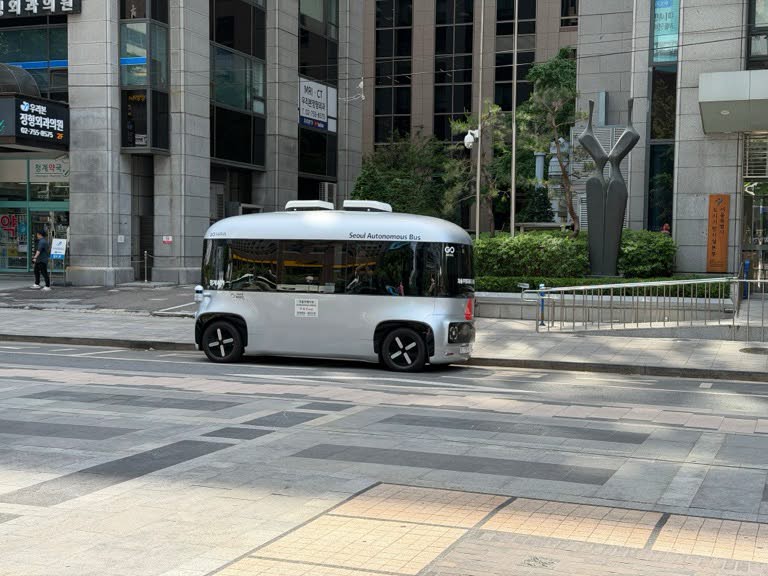
We saw an autonomous (driverless) vehicle.
The stream had lanterns hanging over it still from the Lotus Lantern Festival.
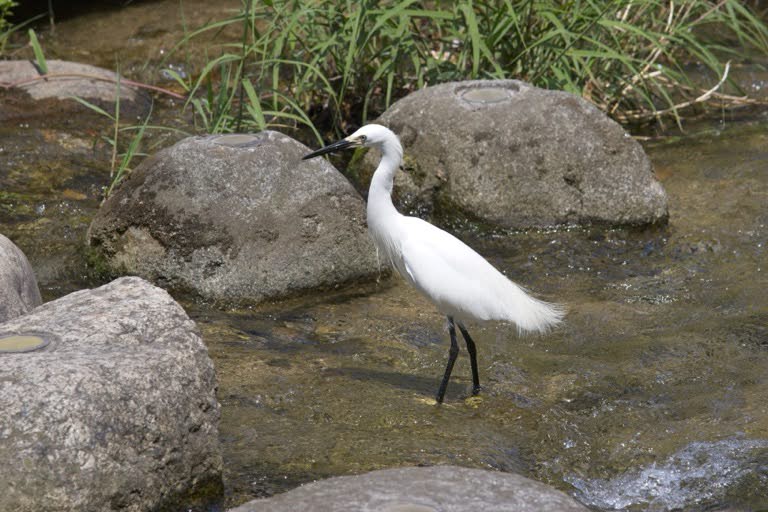
We saw a few birds including this little egret wading in the stream.
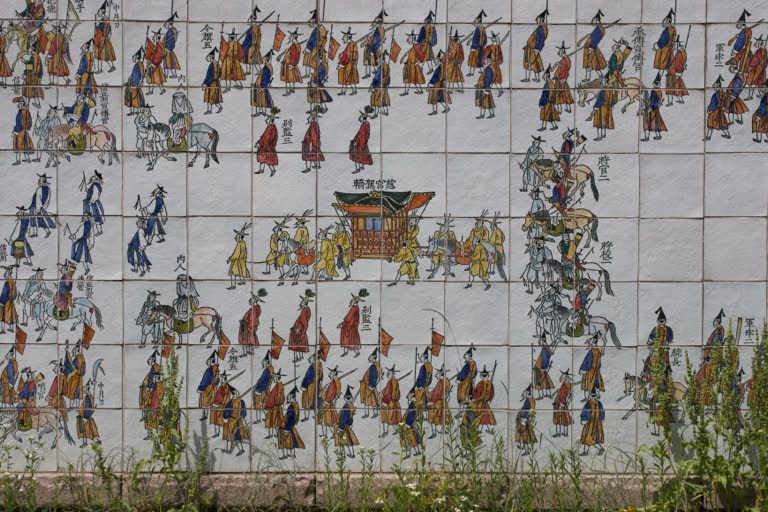
There was a mural painted on the wall on the other side that is a large scale copy of a painting in the 1790s showing the king’s entourage visiting his father’s tomb. It was nearly a block long on the wall.
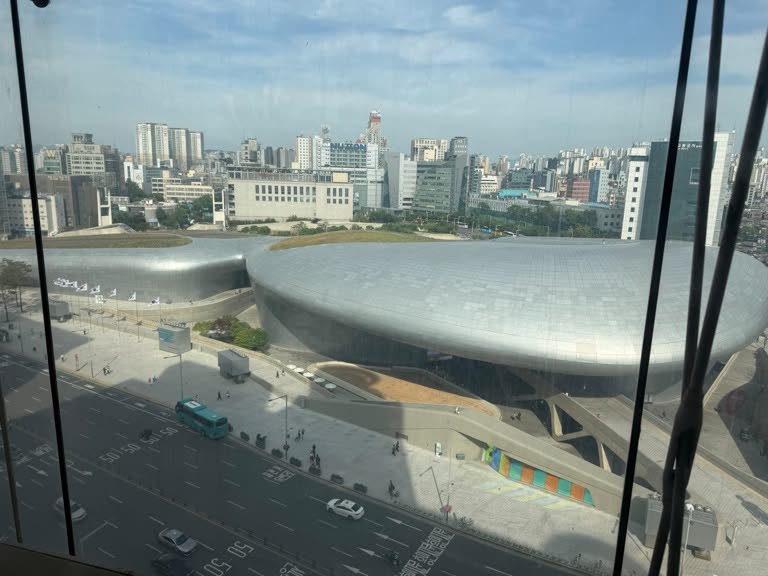
We made it back to the hotel in time for the guide’s free time activity, which was to take the subway over to Dongdaemun Design Plaza which was designed by Zaha Hadid.
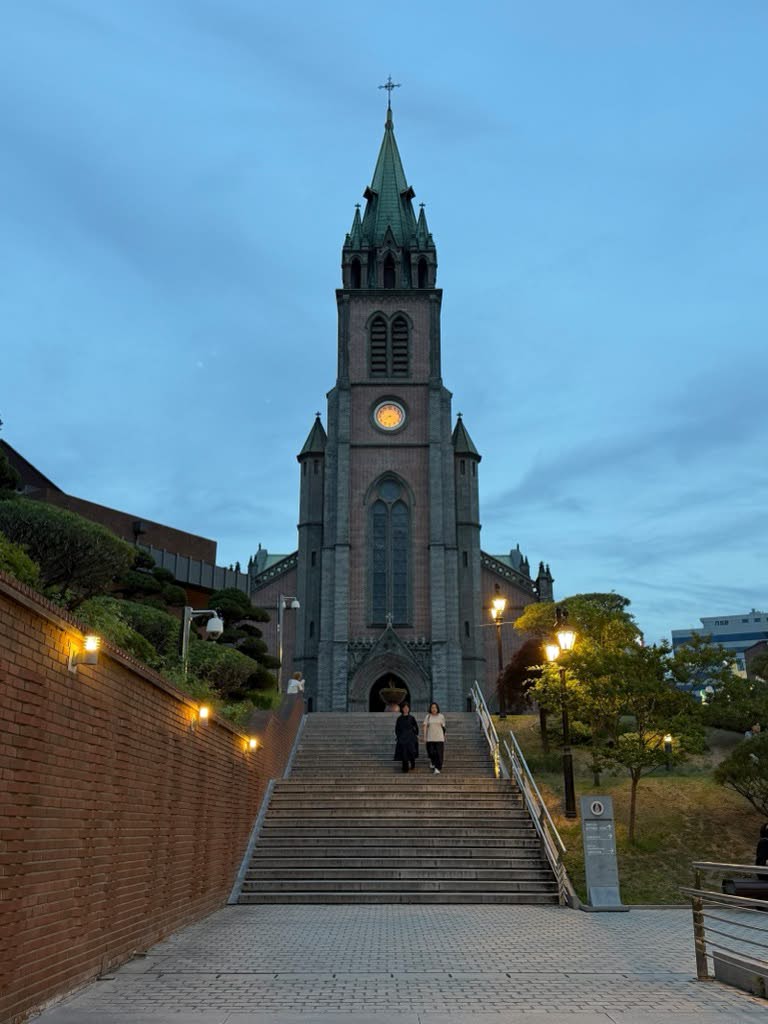
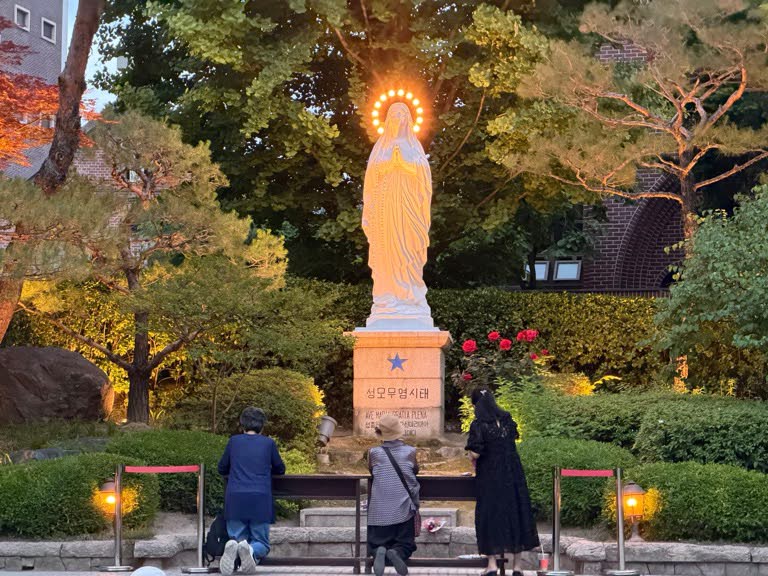
After dinner at a Korean BBQ place, Hansik Wangbijib, we walked by the Myeong-dong Cathedral.