on
Korean Demilitarized Zone
Normally our tour group would start very early in the morning with a drive to the DMZ. But our tour guide was successful in getting a group reservation for the afternoon, so we start the morning with a short talk and a Q&A session with Pak Yu-sung who successfully defected from North Korea at age 17.
Pak Yu-sung’s grandfather was a fairly high level official in the North Korean government but spoke ill of Kim Il-Sung, the founder of North Korea. Pak Yu-sung’s grandfather was “disappeared” and the rest of the family sent to the China border area. His father became a person that arranged meetings between family members separated by the North/South Korea split often through China. Pak Yu-sung’s father had a Chinese cell phone to facilitate this business. His father defected in 2007 and left the phone behind so he could communicate with his family. His father arranged for his wife and son to get out in 2009. The route is through China, down to Thailand, which has a South Korean embassy and accepts requests for asylum. Pak Yu-sung made a movie that talks about the route he traveled, entitled “There live crocodiles in Mekong river”.
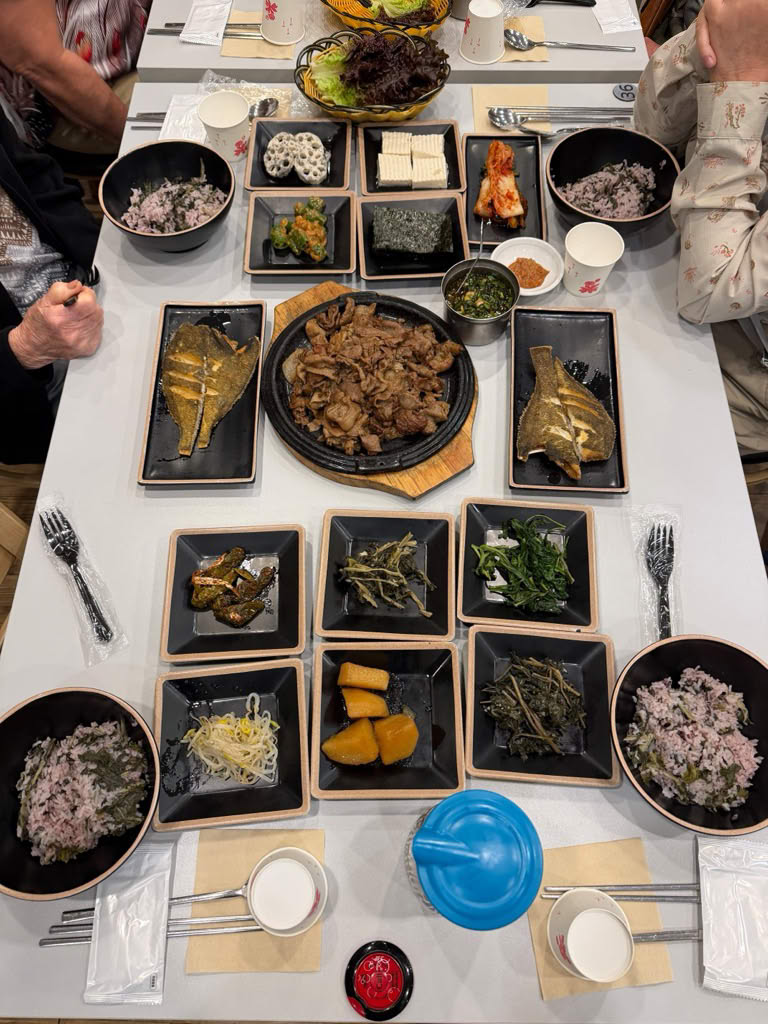
It is going to rain much of the day, so we got umbrellas from the front desk. We got on the bus and had a bit over an hour ride to the DMZ. We stopped for a traditional meal near the DMZ.
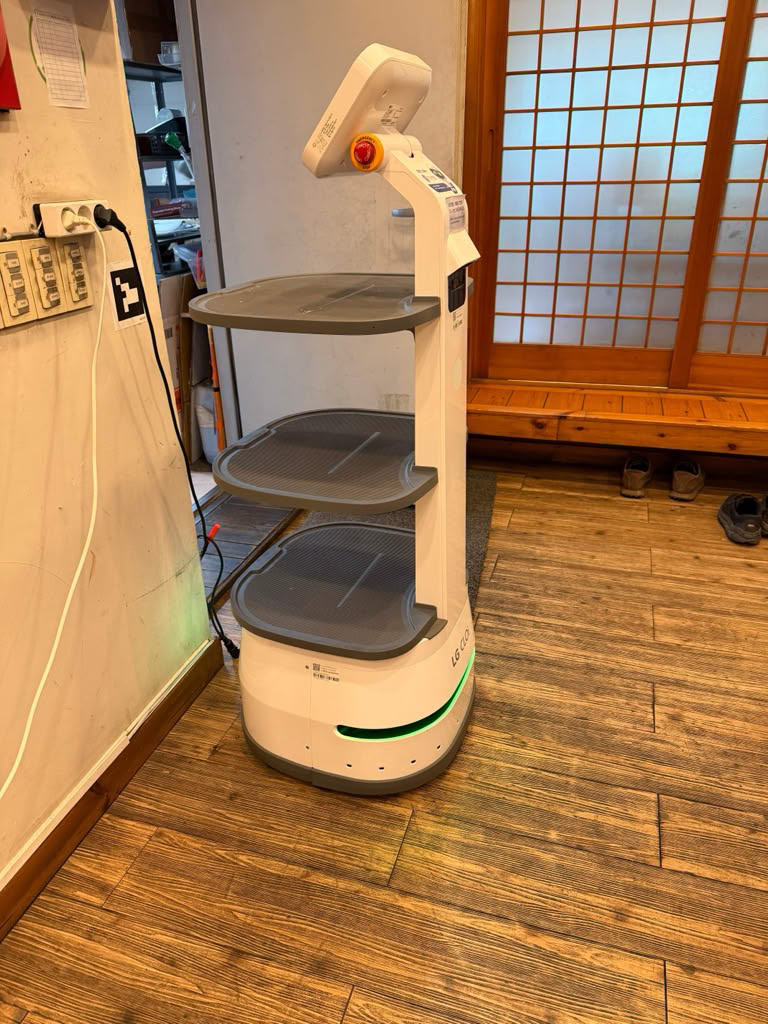
We’ve seen robot waiters that either bring out food on trays or take dirty dishes back to be washed. Even this somewhat rural restaurant has one, but it wasn’t in use when we were there.
We stopped for a bathroom break at Imjingak Peace Park and to see some of the sights in peace park. We board a bus run by the DMZ for the duration of our time here.
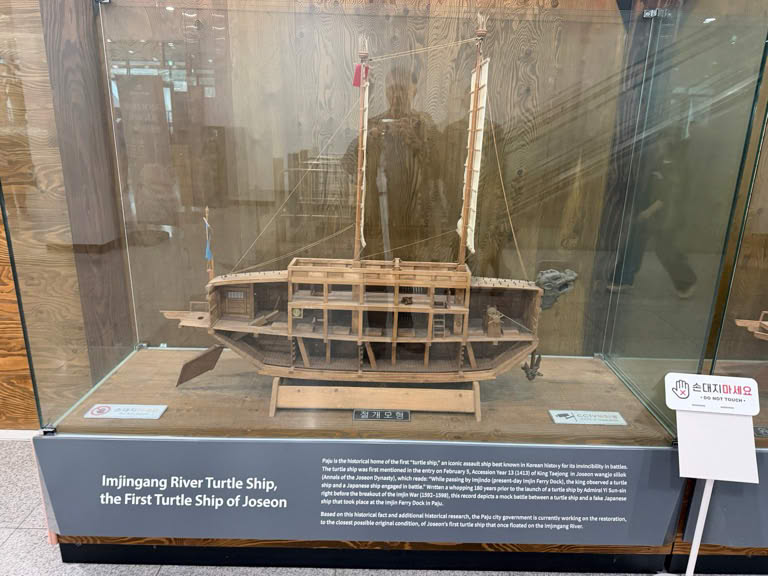
There was an exhibit and a short movie about the Korean Turtle ship.
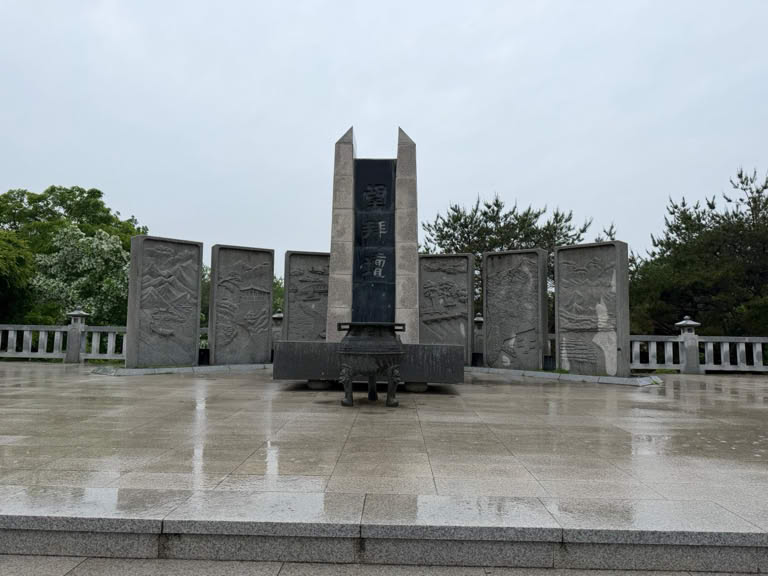
Mangbaeddan is a memorial to the displaced peoples from North Korea that happened to be in South Korea when the split happened. They haven’t been able to return or see their families in North Korea.
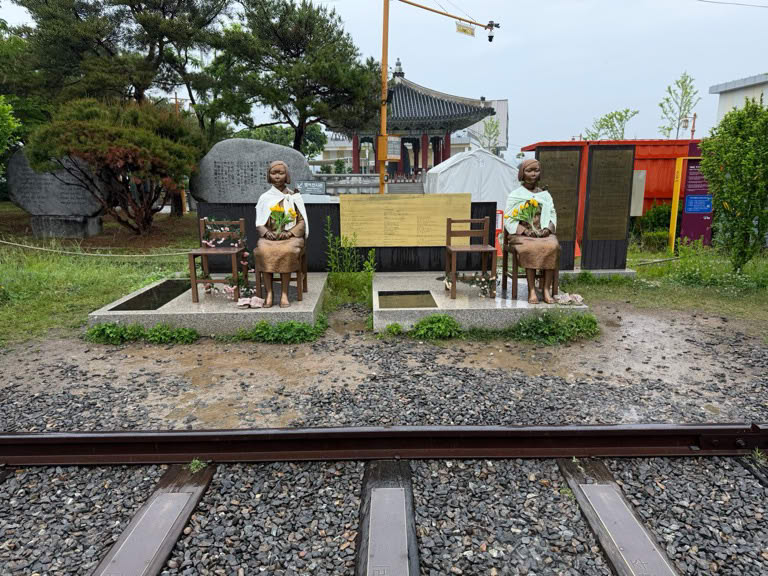
This statue is a memorial to the korean “comfort” women who were abused by the Japanese military during World War II.
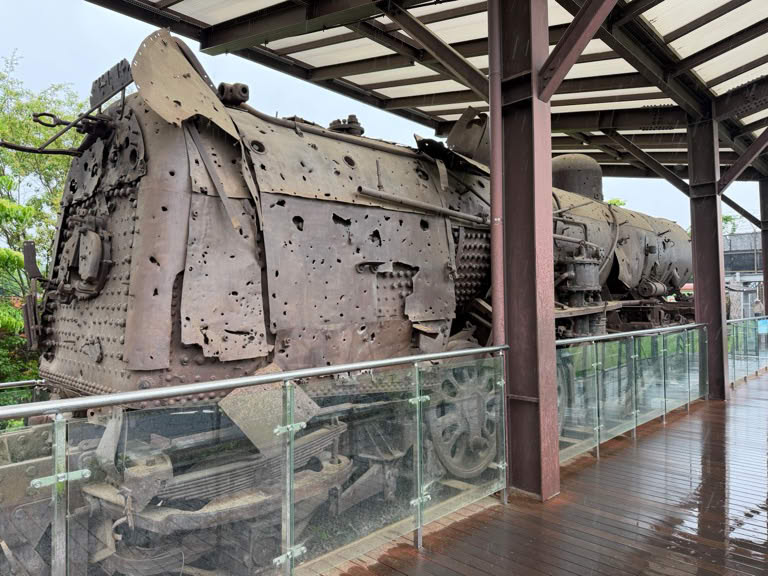
This is the last locomotive to cross the line between North and South Korea. It was attacked in 1950 by Chinese mercenaries as it was retreating from North Korea.
The Freedom Bridge was used by returning POWs from North Korea.
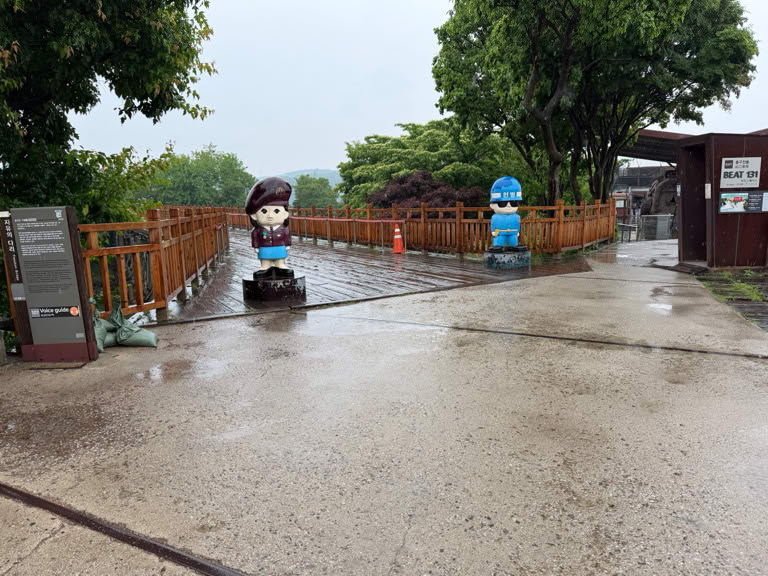
Our first stop is tunnel #3. This tunnel was found in 1978. It opened as a tourist attraction in 2002.
There are no photos allowed in the tunnel. You walk down the 360 meters long 11% grade of the interception tunnel. Then you walk 265 meters along the North Korean tunnel to where the South Koreans blocked the tunnel. The North Korean tunnel is about six feet wide and averages about 5 1/2 ft tall. It has a very slight slope of 1/1000% towards North Korea so that water wouldn’t pool in the tunnel as they were digging it. There is scaffolding in the tunnel to prevent rocks from falling on you. You are required to wear a hard hat. I spent most of my time in the tunnel ducking down to not hit my head. The South Koreans put three barriers in the tunnel, on their side of the line, you stop about 170 meters before entering under North Korea. Then you turn around and walk back out of the North Korean tunnel and back up the 11% grade interception tunnel. You have to pass the people walking to the end so you end up going single file each way. There are benches to stop and rest along the interception tunnel. In the parking lot there was a mockup of the end of North Korean tunnel where you turn around.
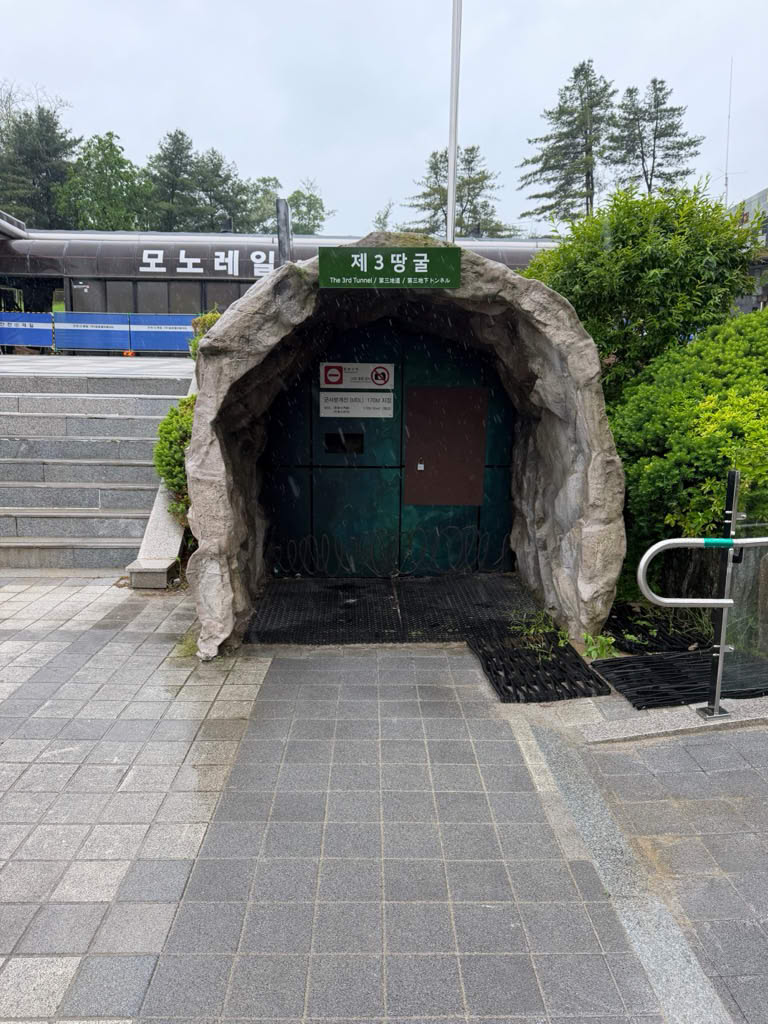
Then we boarded the bus and drove to the Dora Observatory which overlooks the dividing line from a higher ridge. It was cloudy and raining, so we couldn’t see much of North Korea. No photos allowed again.
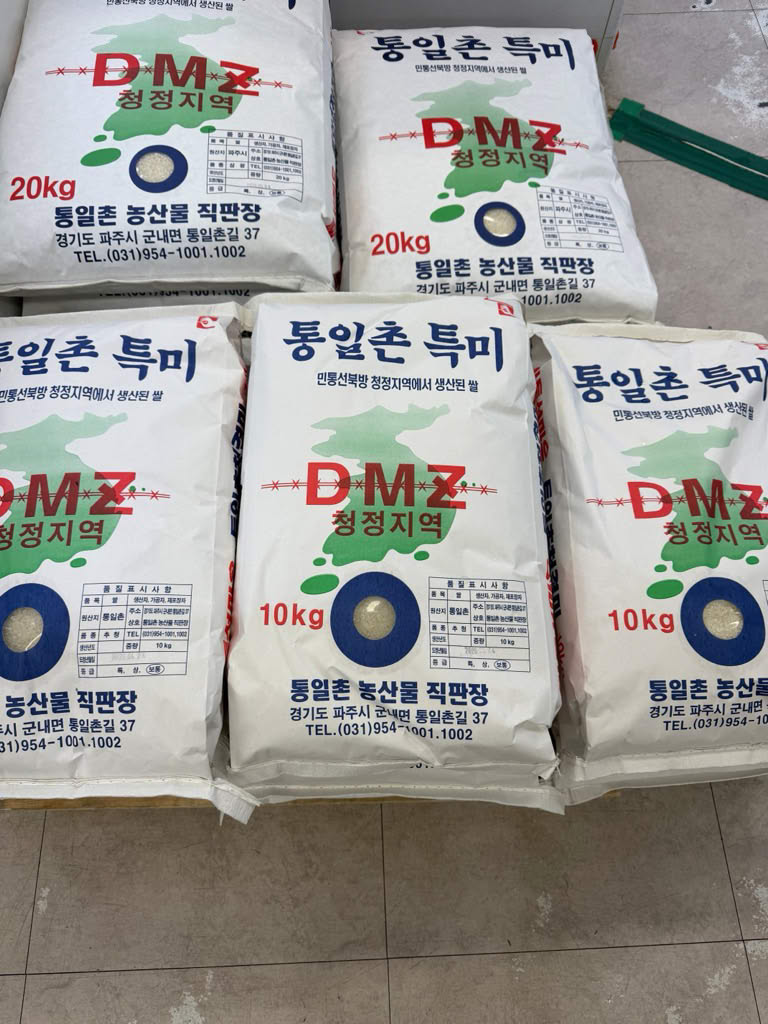
Then we went to Tongil-chon Unification Village which is one of the two small villages in the South Korean side of the DMZ. It’s mostly an agricultural region, you could buy a 10 kg bag of rice that was grown in the DMZ. The shop is interesting because it caters both to the locals and the tourists. The locals use it because leaving and entering the DMZ area is a time-consuming operation with security checks.
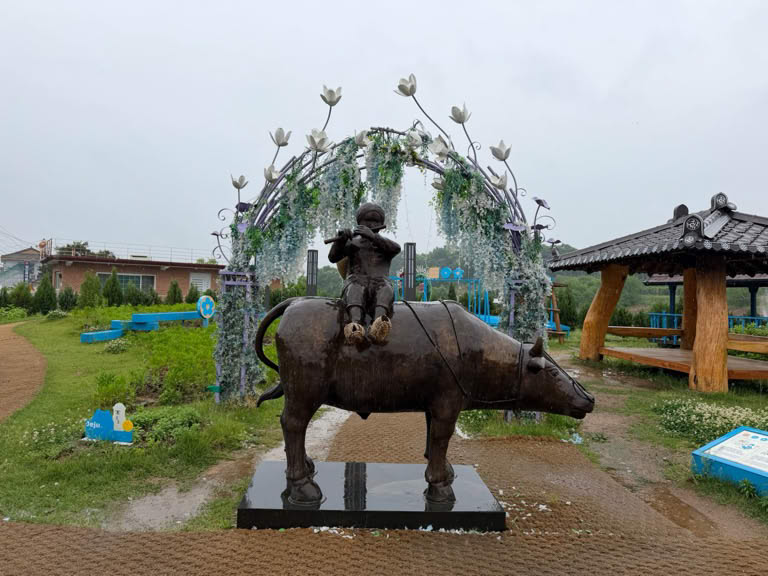
There was a little park across from the shop that had a statue of a buffalo and a little boy playing a flute.