on
Elizabeth Bay and Urbina Bay
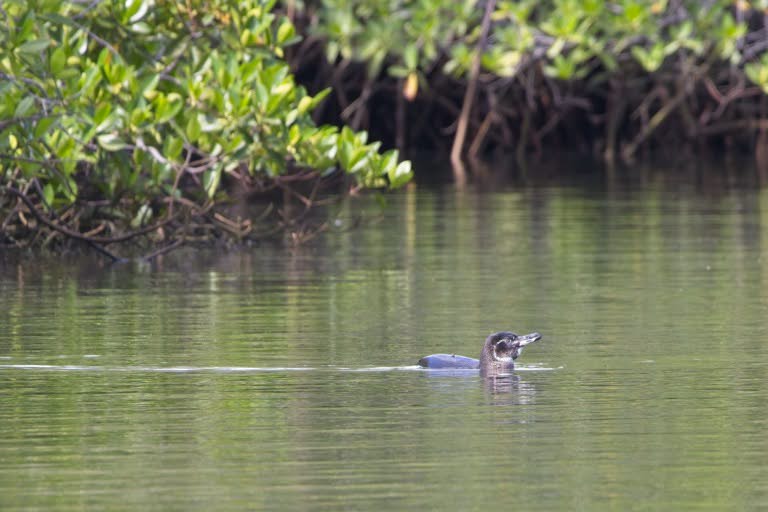
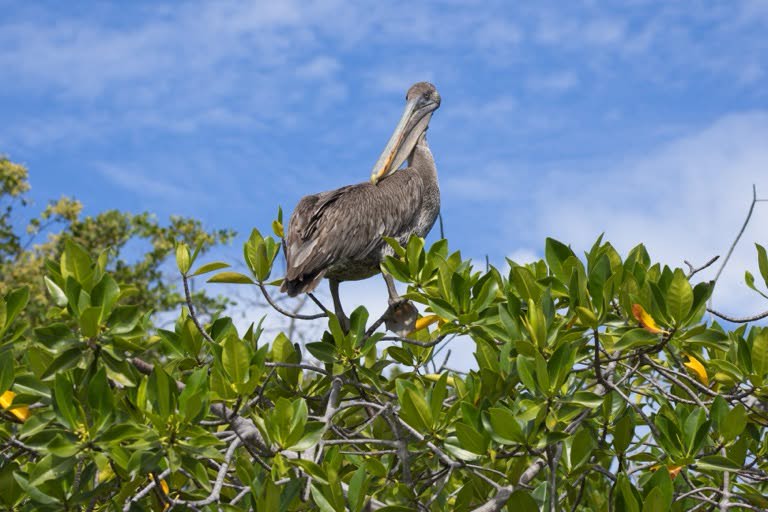
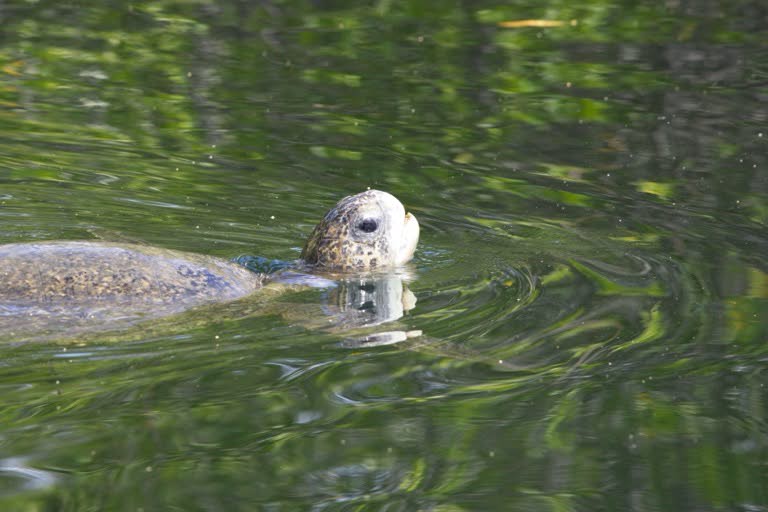
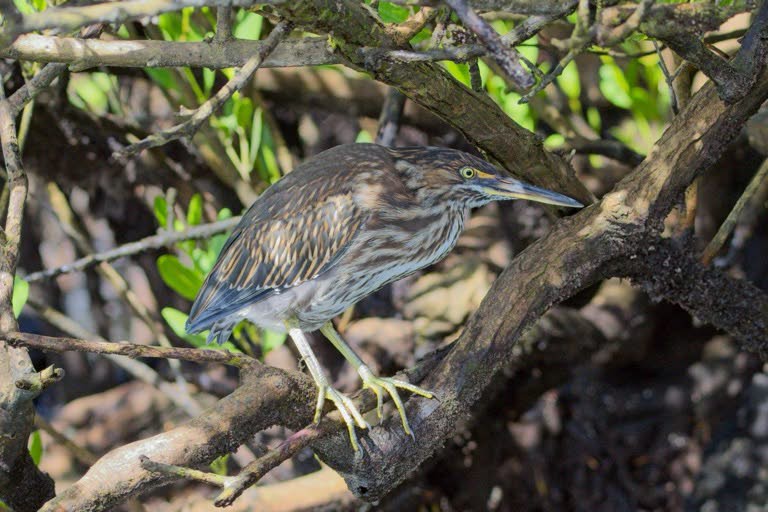
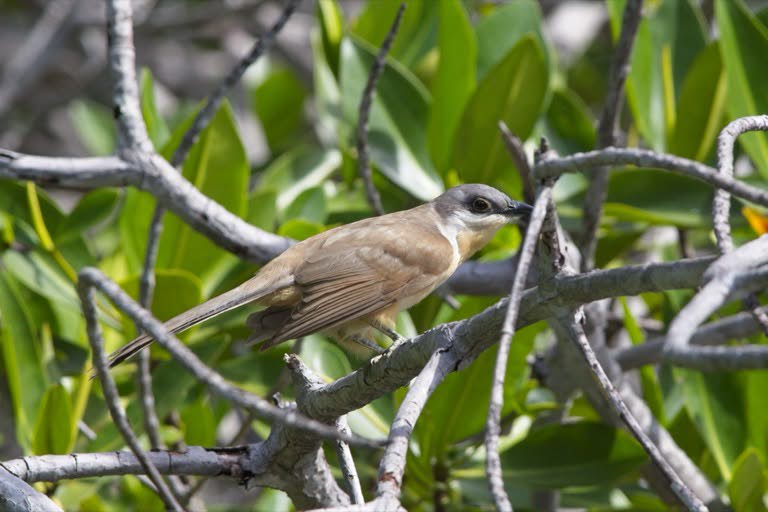
Elizabeth Bay is on the west side of Isabela Island. It is an area of mangroves that has lots of wildlife. Tours here are a panga ride, you don’t get off or get in the water.
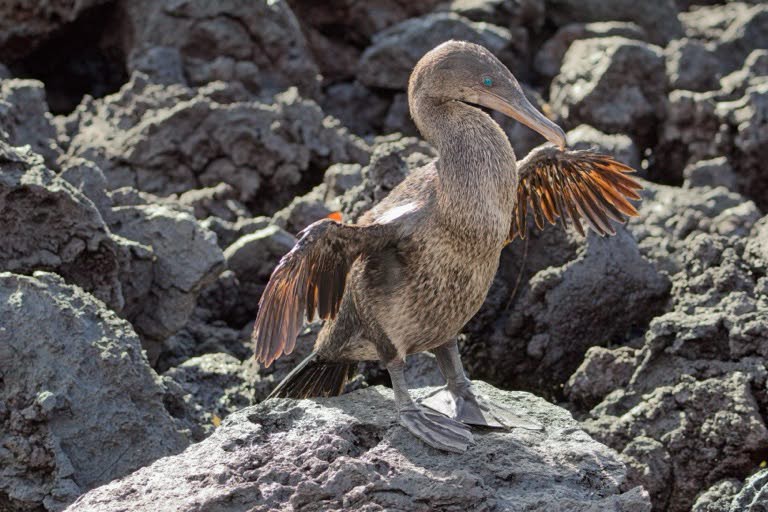
We saw lots of wildlife on our Elizabeth Bay Panga Ride in the mangroves. We had our first sighting of the Flightless Cormorant. The Flightless Cormorant evolved from cormorants that could fly when they were probably blown from the mainland in a storm, but it gets all of its food from the ocean. They flap their wings to swim in the water and are rather quick.
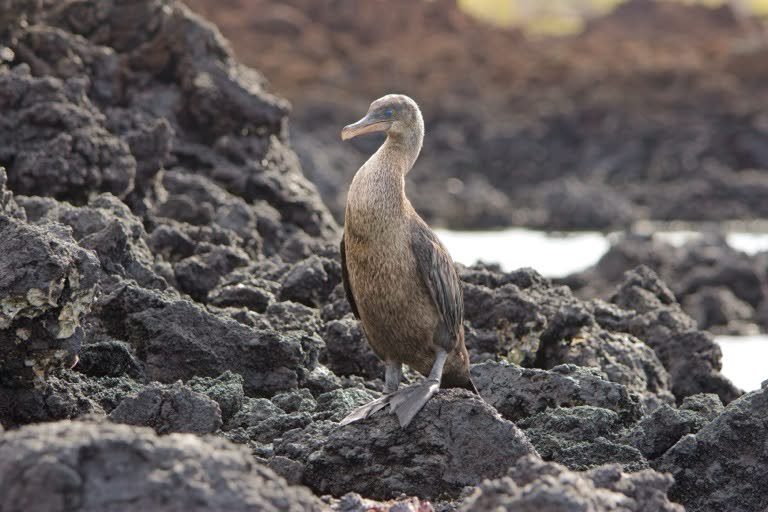
The Flightless Cormorant doesn’t have much oil in its feathers, so it needs to dry them in the sun after diving.
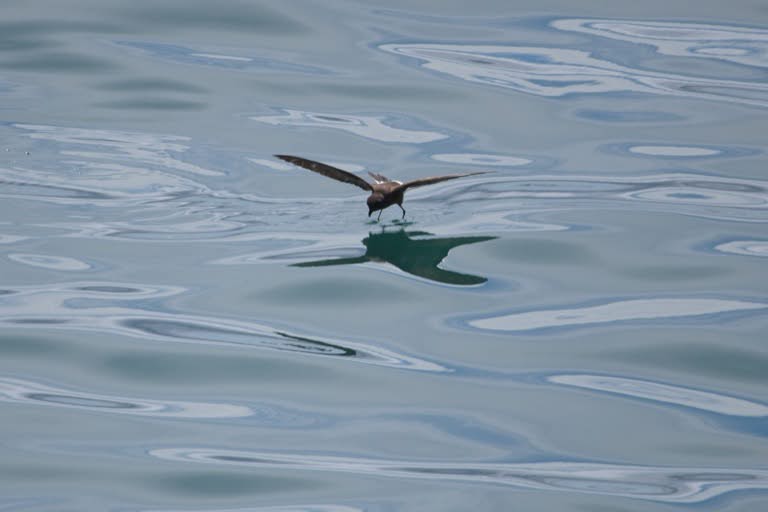
When we were back on the ship before lunch I saw some Elliot’s Storm Petrels off the stern of the ship. Petrels got their name from their feeding behavior where they just dip their feet in the water, giving the illusion of walking on water like Peter.
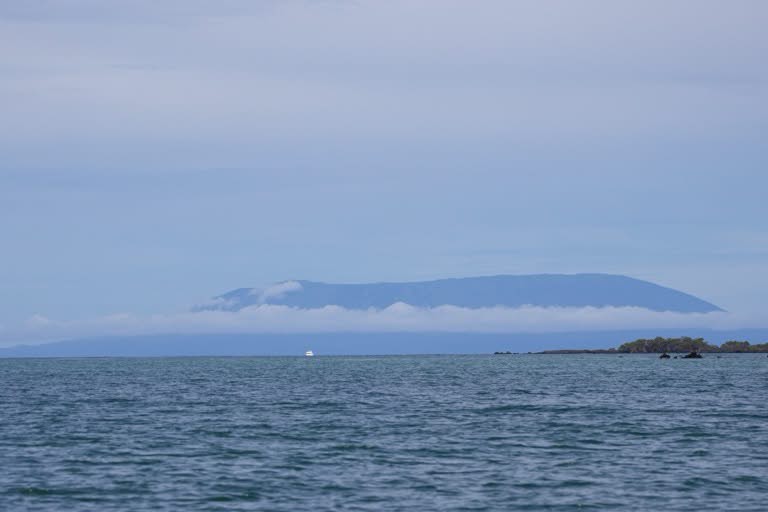
We were able to see the Sierra Negra volcano, which we climbed up yesterday better today because there wasn’t as much rain.
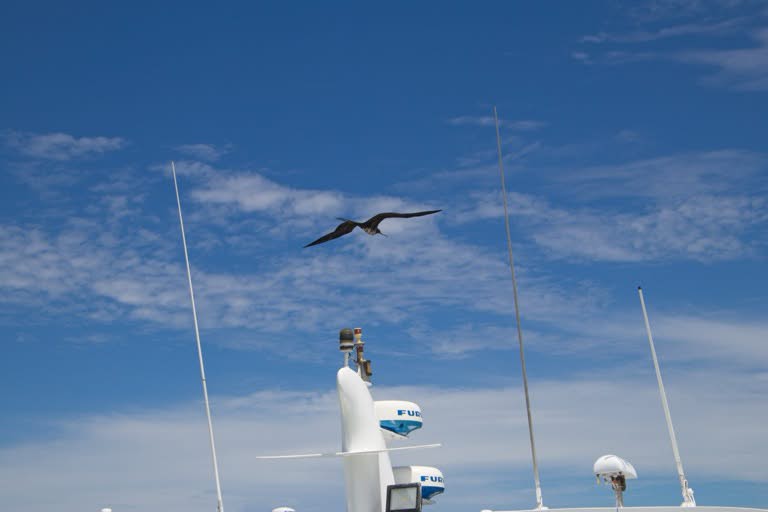
Frigatebirds like to soar along with the ship when it sails.
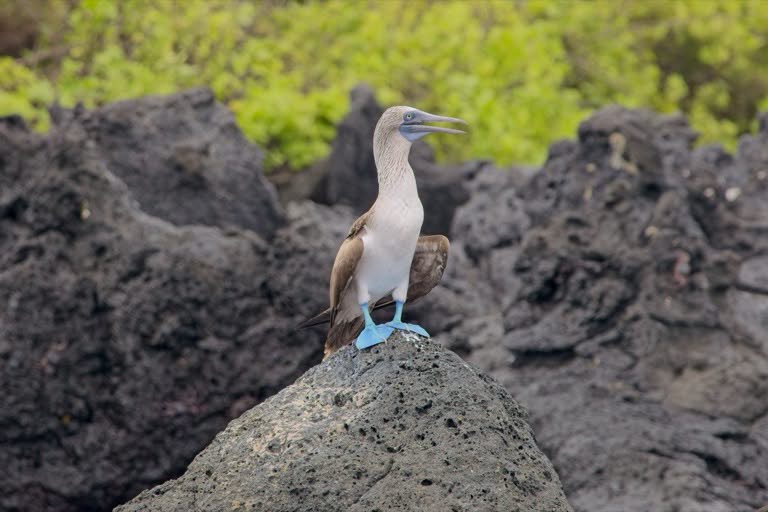
After a lunch, we visit Urbina Bay for a hike. A Blue-footed Booby was our greeting committee near the landing site.
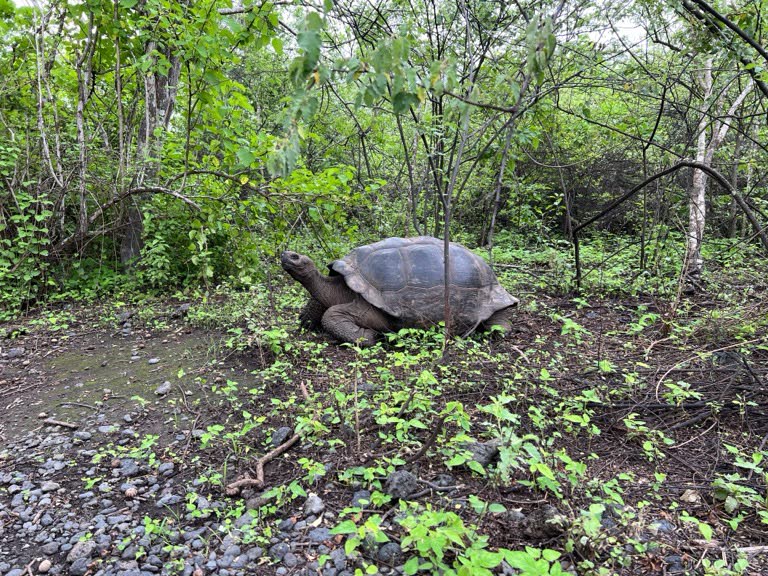
The land iguanas here are large and bright yellow. They have no predators once they get big.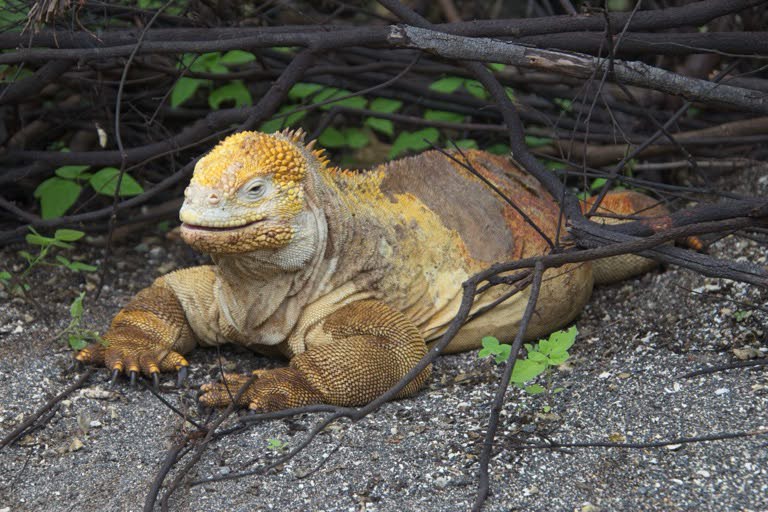
This is a wet landing, when boarding the panga to return to the ship, the panga jumped up when Steve boarded and he slipped off almost dumping the camera in the water.
Snorkeling was 5 degrees F cooler because of the cooler Cromwell current hitting the western side of the island and coming to the surface. The camera fogged up quickly in the colder water. Donna didn’t wear her wetsuit and wasn’t too cold in the water.
As we were sailing up the west side of Isabella Island to our next stop at Tagus Cove we had a pod of dolphins that went with us, playing near the bow for 10 minutes.
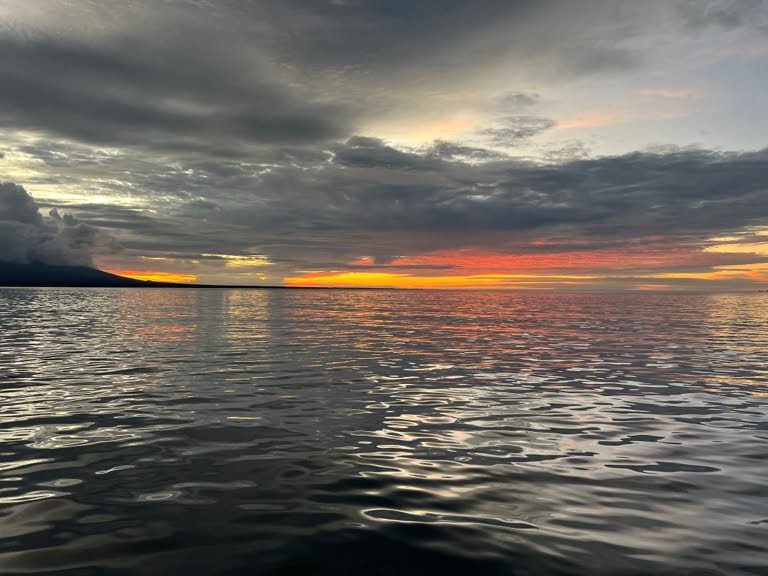
There were some clouds at sunset, but it cleared out later.
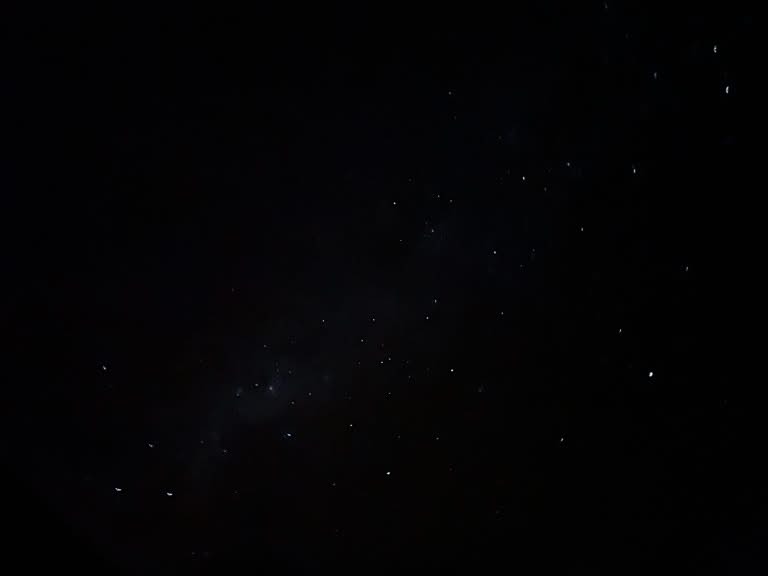
After the briefing after supper, went up top to see the stars. The clouds had cleared out. This is one of the darkest spots in the Galapagos, the only light sources are the tourist ships and the stars, there are no settlements visible. We saw the milky way clearly, but taking a photo requires a long exposure from stable ground, not a moving ship. You can see a little bit of the milky way.
We saw three galapagos sharks, and a sea lion in the water around our boat at night. There are just a few dim lights that shine into the water at night. The ship is pretty dark at night.